
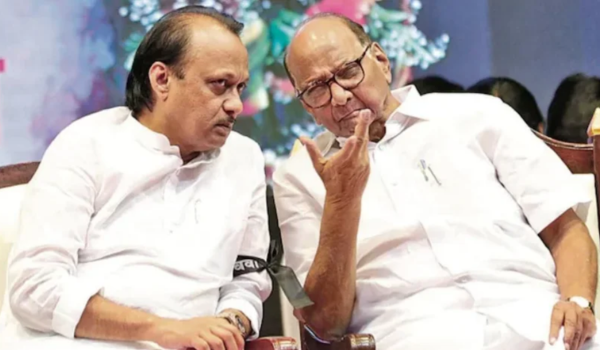
In the 2026 municipal elections held on January 15 for the Pimpri-Chinchwad Municipal Corporation (PCMC) and Pune Municipal Corporation (PMC), the Bharatiya Janata Party (BJP) has taken a commanding lead, while the Pawar-led Nationalist Congress Party (NCP) alliance has struggled to make a significant impact despite campaigning aggressively in both cities. Early counting trends show a substantial advantage for the BJP across the majority of wards, underlining its continued appeal among urban voters in western Maharashtra and signaling a shift in the region’s political landscape.
In Pimpri-Chinchwad, which is one of the region’s most affluent municipal corporations with over 1.7 million registered voters, the BJP has surged ahead across a large number of the 32 wards that were contested, putting it well on track to secure control of the civic body. By comparison, the unified NCP – despite being led by senior leaders and presenting a combined front – lagged behind significantly in early trends, failing to convert its organisational presence into winning leads. Voter enthusiasm in PCMC was lower compared to previous polls, with turnout reported to be around 40-60%, a dip attributed to voter disengagement and logistical confusion at polling stations.
In the neighbouring city of Pune, where all 165 municipal corporation seats were up for election, the BJP has also maintained a robust advantage. Trends indicated the party leading in about 90 seats, comfortably more than the halfway mark needed for a majority, while the Ajit Pawar-led NCP was leading in only about 20 seats. Other parties including the Congress and independents captured a smattering of leads. The overall voter turnout in Pune was around 52%, with some wards such as Aundh-Bopodi recording turnout as low as 45%, while others like Shivane-Khadakwasla-Dhayari saw turnout close to 58% – reflecting varied local engagement.
Comparing these results with previous elections reveals a marked push by the BJP to strengthen its urban foothold. In earlier municipal polls, regional parties including the NCP had been more competitive in these local bodies, but the 2026 trends underscore the BJP’s organisational strength and voter appeal on issues such as development and infrastructure. Analysts note that the Pawar alliance’s inability to translate its regional clout into concrete civic victories highlights challenges in bridging rural and urban electoral dynamics.
The broader context of the 2026 civic polls across Maharashtra – which saw elections in 29 municipal corporations including the Brihanmumbai Municipal Corporation (BMC) – shows that the BJP and its allies are performing strongly across multiple urban centres, not just Pune and PCMC. This pattern could have implications for future state and national elections, as these civic bodies often serve as a barometer of urban voter sentiment ahead of larger political contests.
Overall, the early results point to a decisive advantage for the BJP, a disappointing outing for the Pawar alliance in key urban strongholds, and an electorate that appears to be favouring established development narratives and governance agendas in municipal governance.
For more details and the fastest updates, follow us on @namma.updates. Stay informed and stay connected.