
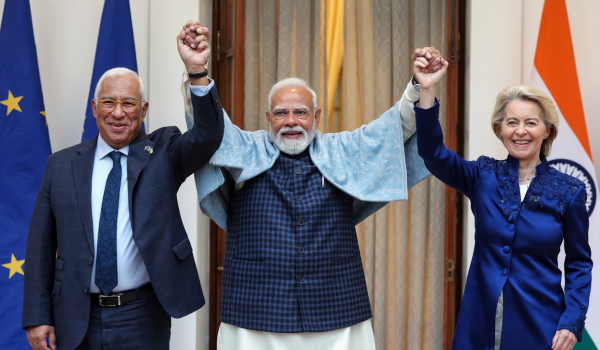
India and the European Union have taken a historic step forward by finalising a long-awaited free trade agreement that leaders are calling the “mother of all deals.” After years of negotiations, the pact marks a major breakthrough in economic cooperation between two of the world’s largest and most influential markets. Beyond diplomacy, the agreement is expected to reshape business opportunities, boost trade flows, and influence the future direction of global commerce.
At its heart, the India-EU trade deal aims to reduce trade barriers, simplify regulations, and create a more predictable environment for companies operating across borders. Once fully implemented, the agreement will connect economies representing nearly two billion people, making it one of the most ambitious trade partnerships in the world.
What the Agreement Covers:
The deal focuses on lowering or eliminating tariffs on a wide range of goods and services traded between India and the EU. Products such as textiles, garments, chemicals, leather goods, gems and jewellery, agricultural produce, and marine exports from India are expected to gain easier access to European markets. In return, India will gradually reduce duties on European products, including automobiles, industrial machinery, pharmaceuticals, and select luxury goods.
Beyond goods, the agreement also addresses services, investment protection, customs cooperation, and regulatory transparency, making it easier for businesses to plan long-term operations. These measures are designed to reduce delays, cut costs, and encourage cross-border investment.
Opportunities for Indian Businesses:
For Indian exporters, the trade pact opens the door to one of the world’s most lucrative consumer markets. Lower tariffs and clearer trade rules are expected to improve competitiveness for Indian manufacturers and producers, particularly in labour-intensive sectors such as textiles and apparel. Small and medium-sized enterprises are also likely to benefit as simplified procedures reduce entry barriers into European markets.
The agreement is expected to support job creation by expanding export demand and attracting foreign investment into India’s manufacturing and services sectors. It also strengthens India’s position in global supply chains at a time when companies worldwide are looking to diversify sourcing and reduce risk.
Gains for European Companies:
European businesses stand to gain greater access to India’s fast-growing economy and expanding middle class. Reduced import duties and clearer investment rules are expected to encourage European firms to increase their presence in sectors such as automobiles, clean energy, engineering, financial services, and advanced manufacturing.
With India emerging as one of the world’s fastest-growing major economies, the deal offers European companies long-term growth opportunities while deepening industrial and technological cooperation between the two regions.
Impact on Markets and Consumers:
The India-EU trade agreement is expected to have a positive impact on markets by boosting trade volumes and increasing investor confidence. Lower tariffs could gradually translate into more competitive pricing and a wider range of products for consumers on both sides.
Indian buyers may gain better access to high-quality European goods, while European consumers could see increased availability of Indian products across fashion, food, and lifestyle segments. Over time, enhanced competition is likely to drive innovation and improve quality standards.
Why the Deal Matters for Global Trade?
The timing of the agreement is significant. Global trade has faced growing uncertainty due to geopolitical tensions, supply chain disruptions, and rising protectionism. Against this backdrop, the India-EU pact sends a strong signal in favour of open markets and economic cooperation.
Trade experts believe the deal could serve as a model for future agreements, showing how major economies can align interests while respecting regulatory standards. By strengthening ties between Asia and Europe, the agreement also helps rebalance global trade flows and reduce over-dependence on any single market.
A Long-Term Strategic Partnership:
While the immediate economic gains are important, the broader significance of the India-EU trade deal lies in its long-term strategic value. It deepens trust, strengthens political ties, and lays the foundation for collaboration in areas such as climate action, digital trade, and sustainable development.
As implementation begins, businesses and investors will be watching closely. If executed effectively, the “mother of all deals” could redefine India-EU relations and leave a lasting mark on global trade for decades to come.
For more details and the fastest updates, follow us on @namma.updates. Stay informed and stay connected.