
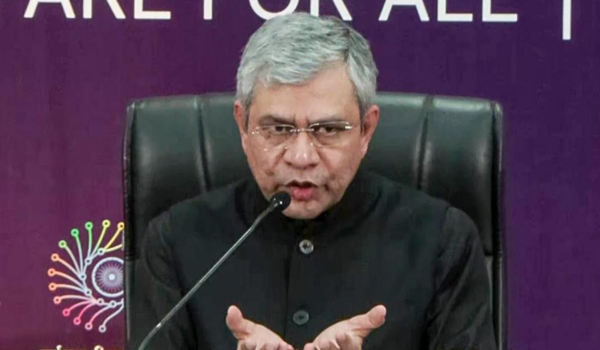
The political temperature has risen sharply following the recently concluded AI Summit, with fresh tensions emerging between the ruling government and the opposition. What began as a high-profile event focused on artificial intelligence and India’s digital future has now turned into a political flashpoint after controversial remarks triggered criticism from multiple quarters.
The controversy escalated when India’s IT Minister publicly apologised for statements made during the summit that drew objections from opposition leaders. The apology came after sustained criticism, with the Congress party demanding greater accountability and clarity from senior members of the government, including Union Minister Hardeep Singh Puri.
Congress leaders have specifically called upon Hardeep Singh Puri to clarify his role and position in the matter. According to opposition representatives, discussions at international technology platforms must reflect transparency, consistency, and national interest. They argue that any ambiguity in official statements could impact India’s global credibility in emerging sectors like artificial intelligence.
The AI Summit itself was positioned as a landmark event aimed at showcasing India’s growing leadership in artificial intelligence, innovation, and digital infrastructure. The government has consistently highlighted AI as a pillar of economic growth, with ambitious plans to integrate the technology across sectors such as healthcare, education, governance, cybersecurity, and manufacturing.
However, the political controversy has overshadowed the technological achievements highlighted at the summit. Critics claim that certain remarks created confusion regarding policy direction and international collaborations. In response, the IT Minister clarified that there was no intention to miscommunicate and that the government remains firmly committed to strengthening India’s AI ecosystem.
Political observers note that AI policy has become increasingly sensitive, given its strategic importance. Artificial intelligence is no longer just a technological tool—it is a driver of economic competitiveness, job creation, national security, and digital sovereignty. As India positions itself as a global innovation hub, statements made on international platforms carry significant weight.
The opposition has also stressed the need for a structured national AI policy that includes ethical safeguards, data protection measures, and clear regulatory frameworks. They argue that political accountability must go hand in hand with technological ambition.
Meanwhile, government representatives have sought to shift the focus back to development, innovation, and investment. Officials maintain that India’s AI roadmap includes strengthening research institutions, supporting startups, building advanced data centres, and creating skill development programs to prepare the workforce for AI-driven transformation.
The controversy has also sparked broader public debate on political communication and governance in the digital era. In a rapidly evolving technological landscape, even minor statements can trigger major political reactions. Experts believe that as AI continues to shape policy and economic strategies, political discourse around the subject will remain intense.
Despite the political storm, India’s commitment to digital transformation remains clear. The AI Summit has reaffirmed the country’s ambition to lead in artificial intelligence innovation while ensuring inclusive growth. Whether the current controversy settles soon or develops into a prolonged political debate will depend largely on further clarifications and political engagement in the coming days.
For now, the spotlight remains on the government’s response and the opposition’s demands, as the nation watches how this AI Summit controversy unfolds in the broader political landscape.
For more details and the fastest updates, follow us on @namma.updates. Stay informed and stay connected.