
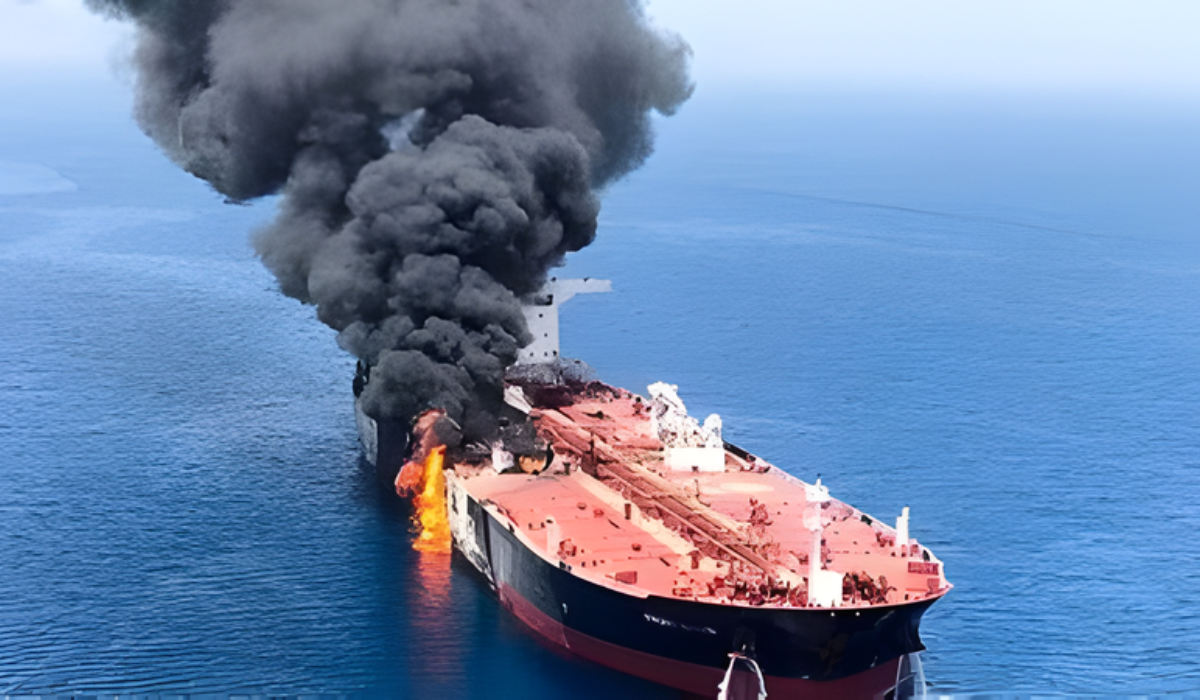
By extending the war to Sunni Gulf countries and disrupting energy supplies, Iran aims to push US President Donald Trump toward backing down.
The US-Israel-Iran war has entered its 11th day, with the Shia theocratic state showing little indication that its stockpile of ballistic missiles or kamikaze drones is running low, as the Islamic Revolutionary Guard Corps (IRGC) continues to strike US interests across the Middle East, Israel, and Gulf countries with notable accuracy and increasing frequency.
By deploying relatively low-cost drones – some costing as little as $35,000 – Iran has forced the US and its Gulf allies to spend heavily, as they fire missiles worth millions of dollars to intercept Iranian kamikaze drones and short- to medium-range ballistic missiles.
The continued use of these weapons suggests that Iran’s missile and drone stockpiles remain far from depleted, indicating that the Shia-led state had prepared extensively for conflict by building a substantial inventory of conventional ballistic missiles along with Shahed-136 drones.
The use of such stand-off weapons has also extended the impact of the conflict beyond the battlefield, placing pressure on US allies in the Gulf while contributing to fears of a global energy crisis, with the Strait of Hormuz under threat and oil traffic through the vital shipping route disrupted.
In many ways, the ongoing high-intensity conflict has significantly altered the traditional concept of warfare, with Operation Sindoor emerging as a precursor to a new-age war doctrine. The reliance on stand-off weapons, long-range delivery systems, and advanced anti-missile defence has effectively turned it into a no-contact war. Targets were reportedly identified through human intelligence even before the first missile was launched toward Tehran on February 28.
While the conflict highlights the advanced military technologies of the US and Israel, it also offers an important lesson in self-reliance for other aspiring powers. Relying on a third country to maintain an uninterrupted supply of military hardware may prove unreliable in worst-case scenarios.
The war also serves as a wake-up call for India’s defence public sector units and the armed forces, which must shed any complacency. Despite facing sanctions, Iran has managed to develop long-range stand-off weapons by reverse-engineering Chinese and Russian missiles and drones. This raises questions about whether India’s defence establishment, including the DRDO, has produced a low-cost drone comparable to Iran’s Shahed-136 kamikaze drone.
The effectiveness of the Shahed-136 has been such that the US reportedly studied and reverse-engineered the drone to counter Iran’s capabilities. A similar trend can be seen in Iran’s conventional ballistic missile programme. The country has not only succeeded in mass-producing missile motors and fuel but has also equipped its delivery systems with GPS guidance for improved accuracy.
Even after 11 days of intense US–Israel strikes, Iran’s command-and-control structure appears to remain operational, continuing to launch missiles in line with a coordinated battle plan.
Iran appears to be widening the scope of the conflict beyond the United States and Israel by drawing Sunni Gulf countries into the confrontation while triggering disruptions in global energy supplies. The strategy seems aimed at creating an international energy crisis that could increase economic and political pressure on U.S. President Donald Trump to reconsider his stance.