
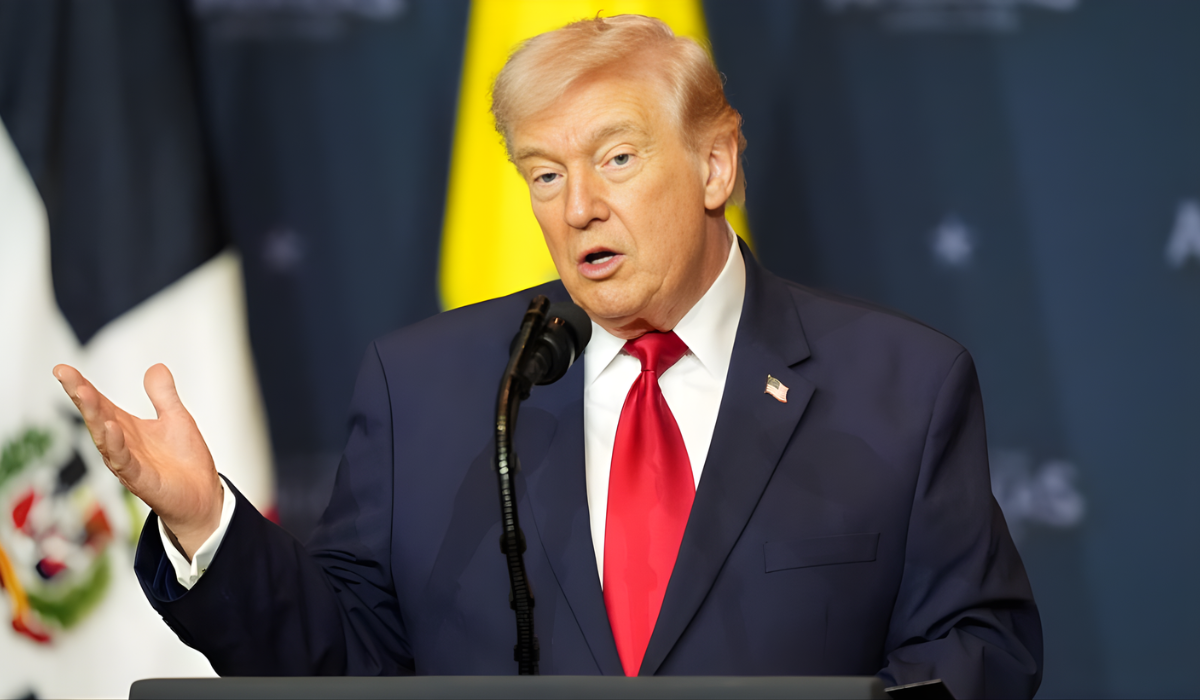
Donald Trump said on Wednesday that the war with Iran could end “soon,” asserting that American forces have already caused extensive damage to Tehran’s military capabilities.
In a brief phone interview with Axios, Trump said there was “practically nothing left to target” in Iran. “Little this and that… Any time I want it to end, it will end,” he said, adding that the conflict was moving faster than initially expected.
“The war is going great. We are way ahead of the timetable. We have done more damage than we thought possible, even within the original six-week period,” he told Axios.
However, despite Trump’s upbeat remarks, officials from the United States and Israel indicated that no formal decision has yet been taken to halt the fighting, and preparations are reportedly underway for at least two more weeks of strikes.
Mines in the Strait of Hormuz
Donald Trump said US strikes destroyed 16 Iranian mine-laying boats on Tuesday, disrupting what Washington described as Tehran’s attempt to threaten shipping lanes.
US intelligence has reportedly detected that Iran began placing mines in the Strait of Hormuz, one of the world’s most important oil transit routes.
The commander of United States Central Command, Brad Cooper, said American forces were steadily degrading Iran’s operational capacity in the region.
“US forces continue delivering devastating combat power against the Iranian regime. US combat power is building; Iran’s combat power is declining,” Cooper said in a video message, adding that Iranian missile and drone attacks had significantly decreased.
Trump also accused Iran of destabilizing the broader Middle East. “They were after the rest of the Middle East. They are paying for 47 years of death and destruction they caused. This is payback. They will not get off that easy,” he said.
Unclear Endgame Amid Political Pressure
Despite Trump’s assertions of progress, uncertainty remains over how the war will conclude. According to the Associated Press, the president has alternated between demanding Iran’s “unconditional surrender” and suggesting that the conflict could end quickly.
Pete Hegseth said the decision on the trajectory of the war ultimately rests with Trump, including whether the current phase represents the beginning, middle, or end of the conflict.
Now in its second week, the war is already affecting the wider Middle East and global markets, with oil prices rising and economic uncertainty increasing. Roughly 20 percent of the world’s oil normally passes through the Strait of Hormuz, which remains largely closed to commercial shipping amid escalating tensions.
Iran has warned it could fully block the key waterway. The Islamic Revolutionary Guard Corps has said Tehran would not allow “a single liter of oil” to pass through the strait until the United States ends its bombing campaign.
The conflict has also triggered political and economic concerns in the United States. Surveys conducted by Quinnipiac University Poll and Fox News suggest that only about three in ten Americans believe the military action has made the country safer. A separate poll by CNN indicates that many Americans fear the strikes could make Iran an even greater threat to the US, according to the Associated Press.
Analysts also say domestic political pressure may influence Trump’s decisions. According to Agence France-Presse, observers believe the president could seek a swift declaration of victory to limit economic fallout, particularly rising oil prices ahead of upcoming US elections.
Even so, Israeli leaders have indicated that operations may continue. Israel Katz said the campaign would proceed “without any time limit, for as long as necessary, until we achieve all the objectives and decisively win the campaign.”