
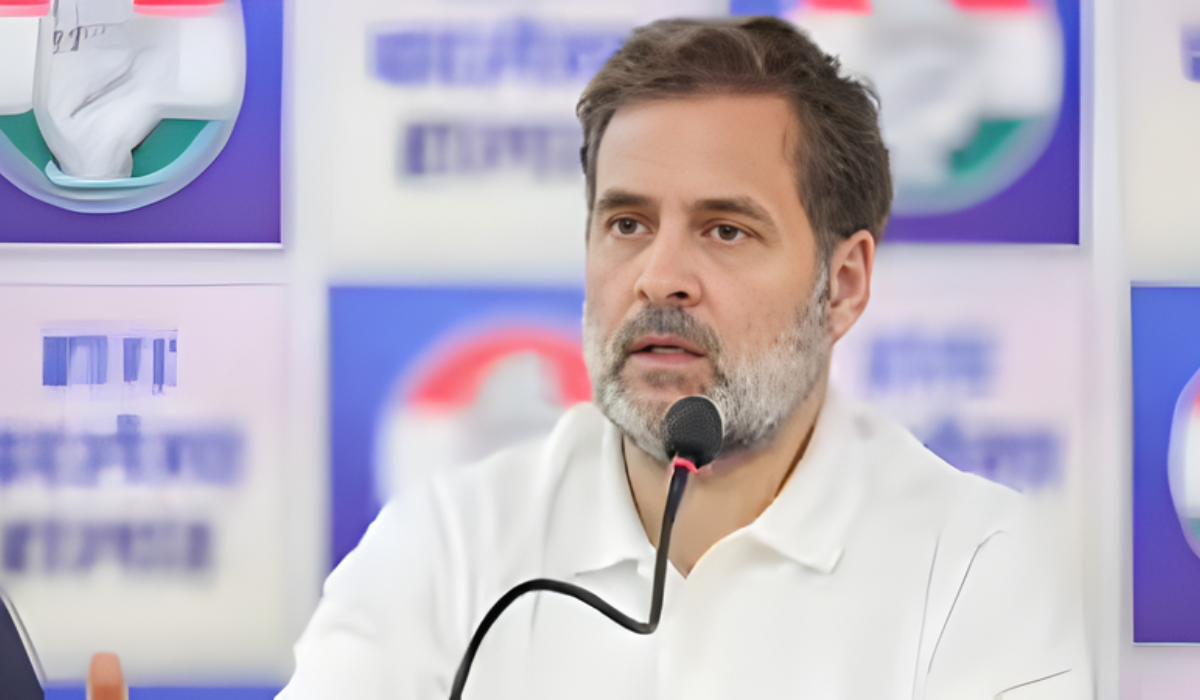
Rahul Gandhi, leader of the opposition and a senior leader of the Indian National Congress, on Thursday warned that India’s energy security could face serious challenges as disruptions in global fuel markets intensify due to the escalating conflict in the Middle East.
Speaking about the possible impact on India’s oil and cooking gas supply, Gandhi said the government must urgently prepare for potential shortages. While speaking to reporters, he said he had sought permission to raise the issue in the Lok Sabha but claimed parliamentary procedures prevented him from doing so immediately.
“Normally, the procedure is that you ask for permission to speak. I requested to make a statement on the LPG and oil situation in the country. But now a new procedure seems to have started where the minister will first decide, then I will speak, and then the minister will reply,” Gandhi said.
His remarks came after K. C. Venugopal requested Om Birla to allow the Leader of the Opposition to raise the issue of the LPG crisis in the House.
Gandhi warned that India could face broader fuel shortages because of rising geopolitical tensions. “Essentially, all fuel could become a problem because our energy security has been compromised. Flawed foreign policy has contributed to this situation. We still have a little time, but the government and the Prime Minister must immediately begin preparations; otherwise crores of people could face serious hardship,” he said.
He added that the ongoing conflict was reshaping the global order and could lead to a prolonged period of instability. “This war is fundamentally changing the world order. It is a much bigger issue than whether Iran allows fuel to pass or not. We are entering a more unstable period, and during such times the government must rethink its approach to protect the people. This is not a political statement—I can see a big problem coming,” Gandhi said.
Taking aim at Narendra Modi, Gandhi said the government must ensure that India’s energy security remains protected despite worsening global conditions.
His comments come as global energy markets face heightened volatility due to the intensifying conflict in the Middle East. Industry indicators suggest crude oil supplies have been significantly disrupted by the ongoing military escalation, pushing benchmark prices such as Brent Crude close to $100 per barrel.
Supplies of natural gas and Liquefied Petroleum Gas are also under pressure as maritime trade routes in the region face disruptions.
One major concern is the near closure of the Strait of Hormuz, a critical maritime passage through which a significant portion of the world’s energy supplies moves. The strait handles roughly 20 per cent of global liquefied natural gas (LNG) trade, making it one of the most important chokepoints for global energy markets. Any disruption to traffic through this route could significantly affect the movement of oil, gas, and related energy commodities worldwide.