
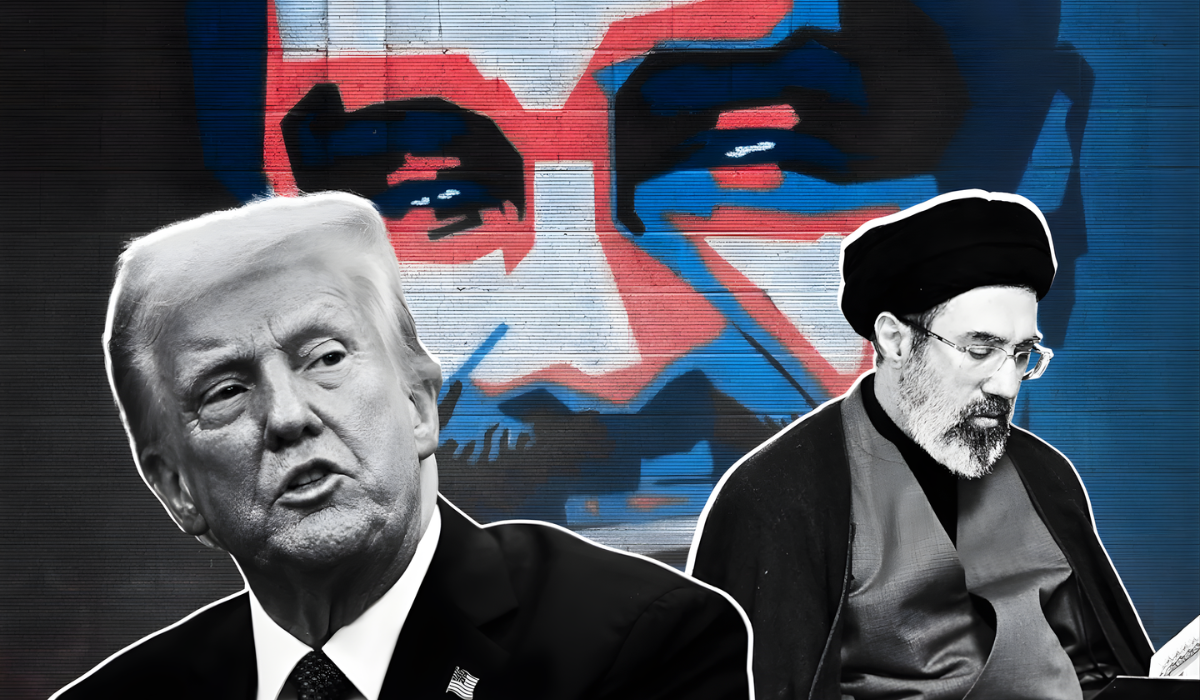
It remains unclear why Donald Trump is dissatisfied with the proposal, but Iran’s plan would delay negotiations over its nuclear programme. Trump has consistently maintained that Iran must not be allowed to develop nuclear weapons.
Donald Trump is reportedly dissatisfied with Iran’s latest proposal to reopen the strategically vital Strait of Hormuz and bring an end to the conflict. Over the weekend, Iran presented a deal to the United States, suggesting that Washington lift its blockade on the country and its ports and halt the war in the Middle East, while postponing discussions on Tehran’s nuclear programme to a later stage in the diplomatic process.
The proposal, put forward by Abbas Araghchi during his weekend visits to negotiators in Oman and Pakistan, is aimed at breaking the stalemate and restarting talks, according to a report by The Wall Street Journal.
However, US officials told The New York Times that Donald Trump and his national security team remain sceptical of Iran’s proposal. While the exact reason for Trump’s dissatisfaction is unclear, the offer would delay negotiations on Iran’s nuclear programme to a later stage. Trump has consistently insisted that Iran must not be allowed to acquire nuclear weapons, and curbing Tehran’s ability to develop them has been a central justification for the conflict.
Marco Rubio also appeared to reject any agreement that leaves out Iran’s nuclear programme. “We can’t let them get away with it,” Rubio said during a Fox News interview on Monday.
“We must ensure that any deal or agreement decisively prevents them from rapidly moving toward developing a nuclear weapon at any time.”
Next phase of the talks
So far, the White House has not issued an official response to Iran’s proposal, but officials familiar with the matter told The New York Times that discussions are expected to continue regarding the war and Tehran’s nuclear enrichment activities. Donald Trump has also previously indicated that Iran could engage in negotiations over the phone.
Olivia Wales said in a statement that the United States would not conduct negotiations through the media, adding that its red lines have been clearly defined and that the president will only agree to a deal that serves the interests of both the American people and the global community.
Iran’s three key conditions
Tehran’s proposal stated that Iran would reopen the Strait of Hormuz on three conditions:
- The United States lifts its blockade on Iran and its ports
- The ongoing conflict in the Middle East is brought to an end
- Talks on Tehran’s nuclear programme are deferred to a later stage in the diplomatic process
Trump’s dissatisfaction with Iran
Iran’s latest proposal reportedly triggered intense debate within the Trump administration, as officials weighed whether the United States or Iran holds greater leverage and which side is better equipped to withstand the economic strain caused by the closure of the Strait of Hormuz.
US officials say Iran’s leadership has not authorised its negotiators to make concessions on the nuclear deal, complicating efforts to reach a peace agreement. Even Donald Trump has voiced frustration over Tehran’s inability to effectively engage in negotiations with his administration.
“Iran is struggling to determine who its leader is – they simply don’t know,” Donald Trump wrote on Truth Social last week.
“The internal conflict between the ‘hardliners,’ who have been losing badly on the battlefield, and the ‘moderates,’ who are not very moderate but are gaining respect, is chaotic,” Donald Trump wrote.
Delaying nuclear talks may have been intended as a quick way to ease pressure on global energy and financial markets. However, even a temporary pause in such discussions could be interpreted as a sign that the war failed to achieve its primary objective – intensifying pressure on Tehran to negotiate over its nuclear enrichment programme.
Pressure mounting on Trump
With a fragile ceasefire in place, the US and Iran remain locked in a standoff over the Strait of Hormuz – a vital route through which roughly a fifth of the world’s traded oil and gas moves during peacetime.
The US blockade is intended to curb Iran’s oil exports, cutting off a key source of revenue while also risking a scenario in which Tehran may be forced to halt production due to limited storage capacity.
The closure of the strait has also increased pressure on Donald Trump, as oil and gasoline prices have surged ahead of key midterm elections. It has further strained his Gulf allies, who rely on the waterway to export their oil and gas.
Frustration is also growing among many countries, with renewed calls on Monday to end the blockade, which has had widespread impacts on the global economy, including driving up the cost of fertiliser, food, and other essential goods.