
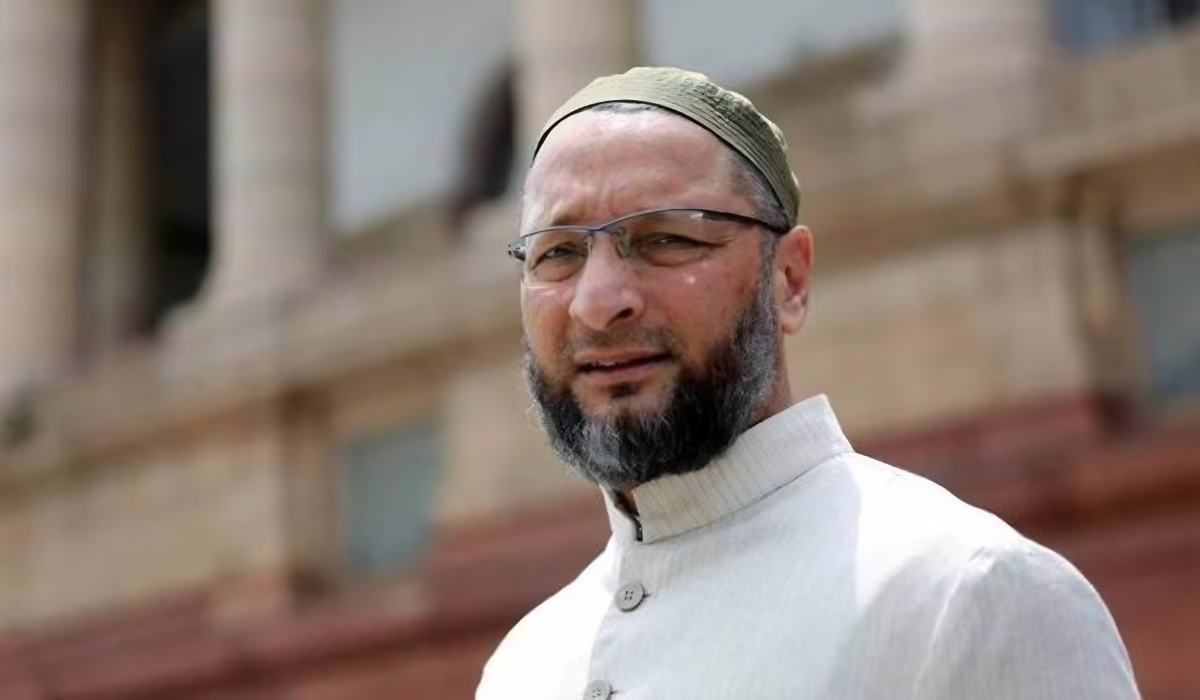
The Haj Committee of India’s decision to raise Haj airfare by ₹ 10,000 per pilgrim drew sharp criticism from political leaders, with Asaduddin Owaisi calling it “exploitation” and demanding the withdrawal of the order.
However, Kiren Rijiju said the hike was driven by a global rise in aviation turbine fuel prices. He added that airlines had initially sought a steep increase of ₹ 30,000 – 40,000 per pilgrim, but negotiations brought it down to ₹ 10,000. The circular states that pilgrims must pay the additional fare by May 15.
Citing the conflict in West Asia, the Haj Committee of India, under the Union Ministry of Minority Affairs, issued a circular stating that pilgrims will have to bear an additional ₹10,000 as differential airfare.
Asaduddin Owaisi, the MP from Hyderabad, said the additional charge is being imposed “despite ₹ 90,844 having already been collected per pilgrim a few months ago from the Mumbai embarkation point.” He added, “This is nearly double the prevailing fares for individual travelers. Are pilgrims being penalized for booking through the Hajj Committee? This is outright exploitation. Most pilgrims are not wealthy; they save for years to undertake Haj. It is not a luxury for them. The circular should be withdrawn immediately, and the money must be refunded.”
Imran Pratapgarhi said that “forcing” an additional ₹ 10,000 on Haj pilgrims just before their journey amounts to “utter injustice.” He questioned why the hike was imposed at the last minute despite fares already being fixed, adding that he plans to meet Kiren Rijiju and Kinjarapu Rammohan Naidu to raise the issue.
The Union Ministry of Minority Affairs said in a statement that it “recognizes the concerns of pilgrims who spend years saving for Hajj.”
The ministry said airlines had sought an additional USD 300 – 400 per pilgrim due to a sharp rise in aviation turbine fuel prices linked to the ongoing Middle East crisis, describing it as a global situation beyond any government’s control. It added that after extensive negotiations and consultations, a one-time increase of USD 100 per pilgrim was approved, resulting in savings of USD 200 – 300 compared to the airlines’ initial demand.
The ministry said the move was “not exploitation,” but rather an effort by the government to absorb the pressure and shield pilgrims from a much larger financial burden.
Kiren Rijiju said that amid a sharp global surge in aviation turbine fuel prices driven by geopolitical tensions, airlines had sought a steep increase of $300 – $400 per pilgrim. “We cannot blame airlines for the rise in fuel costs. Through negotiations, we limited the hike to $100, saving pilgrims a significant amount. The decision was taken transparently and in good faith to ensure there is no disruption to Hajj 2026 operations,” he added.