
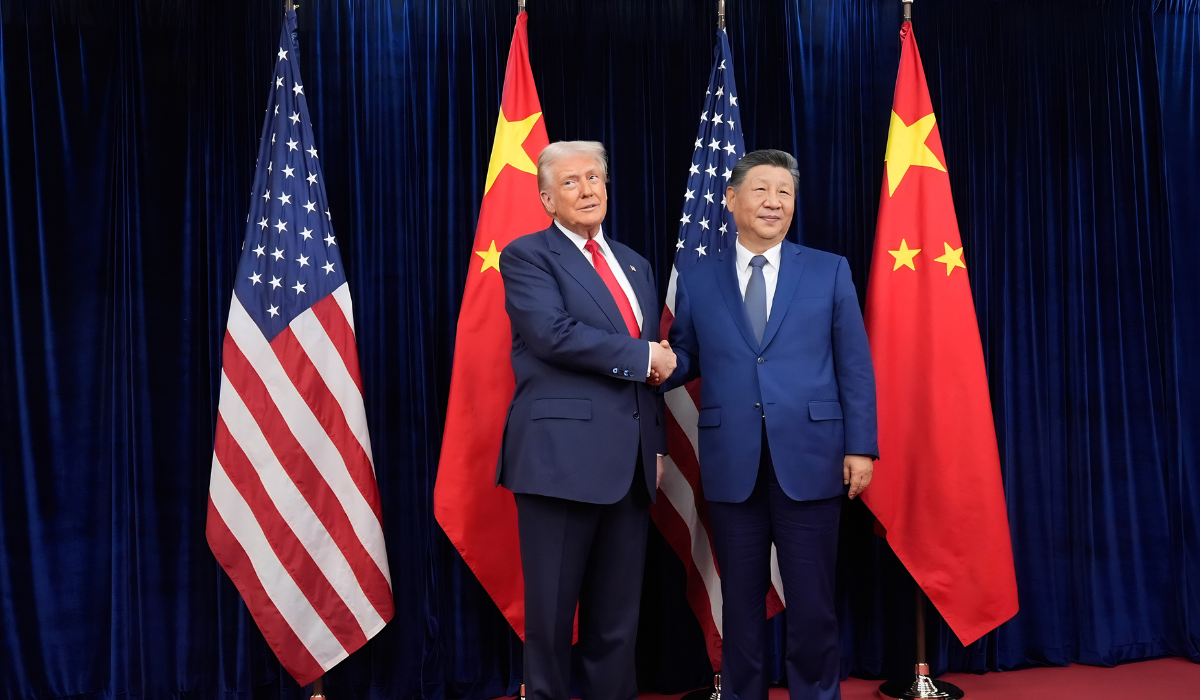
Donald Trump heads to China this week with less leverage than at any other point in his presidency, as the unresolved US-Iran conflict, instability in the Gulf, and growing uncertainty across the Indo-Pacific increase pressure on Washington, Beijing, and New Delhi alike.
The recent Point Blank conversation between Hindustan Times Executive Editor Shishir Gupta and Senior Anchor Aayesha Varma paints a picture of a world where leaders remain constantly engaged, yet lasting solutions continue to stay out of reach.
Trump’s China Visit Lacks Leverage
Gupta points out that Trump is arriving in Beijing at a moment when many of his traditional pressure tactics have lost their effectiveness, while the Iran conflict continues to loom over every major discussion. Washington has already dismissed a proposal conveyed through Pakistan, in which Tehran refused to compromise on the nuclear issue and tied the reopening of the Strait of Hormuz to a set of conditions, making the proposal unworkable from the outset.
The situation is further complicated by Trump’s reduced ability to use tariffs as a negotiating tool after US court rulings weakened his authority to impose even a 10% levy on China. During the previous tariff escalation, Beijing responded by restricting critical mineral supplies, forcing Washington to step back and underscoring that economic pressure can work against the US as well.
Gupta also highlights a deeper structural challenge: Trump’s impatience stands in sharp contrast to the political culture of both Beijing and Tehran. According to him, China and Iran are civilizations that value detailed documentation, prolonged negotiations, and carefully crafted agreements, while Trump tends to favor quick outcomes and headline-making deals. This fundamental mismatch, Gupta argues, makes it highly unlikely that the US president will secure any “instant solutions” in Beijing on either the Iran crisis or the wider strategic rivalry with China.
Iran War, Hormuz Choke Point and Rising Global Pain
The unresolved US-Iran war continues to cast a shadow over Trump’s China visit, influencing strategic calculations in Washington, Tehran, Beijing, and New Delhi alike. Mediation efforts through Pakistan have failed to produce a breakthrough, while Iran’s leadership remains firm on maintaining its nuclear stance – the core issue that sparked the conflict. At the same time, the Strait of Hormuz has evolved from a secondary theater of tension into the central battleground of the crisis.
Gupta warns that with the Strait of Hormuz effectively constrained, the global economy is already feeling the strain and may not recover for at least six months even if a ceasefire or agreement is reached immediately. The disruption has also influenced Prime Minister Narendra Modi’s appeal for restrained consumption, especially in the energy sector, as India seeks to shield itself from external economic shocks. According to Gupta, both Trump and the Iranian leadership bear responsibility for pushing the world economy into a “catch-22” situation — one in which Washington cannot secure the concessions it seeks, while Tehran remains unwilling to back down.
China’s involvement further deepens the complexity of the crisis. Gupta argues that Beijing is central to any meaningful diplomatic breakthrough, noting that Chinese assistance to Iran reportedly included satellite imagery and target-related intelligence during Iranian strikes on US bases in the Middle East. This, he says, explains why Trump “needs the Chinese” to make any progress with Tehran, while also highlighting why Beijing has little incentive to let the United States emerge as the decisive victor in the Iran conflict.
Modi’s Gulf and Europe Tour Puts UAE at the Centre
As Trump prepares for his visit to Beijing, Modi is set to embark on a carefully planned tour of the UAE, the Netherlands, Norway, and Italy, with the Gulf leg expected to carry the greatest strategic significance. Gupta points out that the dates for the UAE visit – tentatively scheduled between the 15th and 18th – are being kept flexible due to security concerns amid the continuing regional conflict.
According to Gupta, the India-UAE relationship has quietly evolved into one of New Delhi’s strongest and most wide-ranging strategic partnerships. The ties now extend across food security, energy cooperation, political engagement, de-radicalization efforts, and defense collaboration. He describes the arrangement as a highly complementary partnership: the UAE helps secure India’s energy requirements, while India contributes to the Emirates’ food security, creating a deep and mutually beneficial interdependence.
Ports located outside the Strait of Hormuz have become central to this strategic equation. The UAE is expanding Fujairah and Khor Fakkan – both situated along the Gulf of Oman and beyond the immediate vulnerability of the Persian Gulf choke point. These ports enable Abu Dhabi to continue exporting oil, LNG, and LPG even during disruptions around Hormuz, making them critical to India’s energy security during periods of crisis. However, Gupta notes that Iran has repeatedly targeted the UAE, including Fujairah, with missiles, cruise missiles, and kamikaze drones in what he describes as an effort to “punish” Abu Dhabi for its ties with Israel.
The prolonged pressure, he argues, has revealed a significant weakness within the Gulf Cooperation Council, which has struggled to unite effectively in support of the UAE. This has left Abu Dhabi increasingly disappointed with regional partners it once strongly supported. Gupta believes this situation could pave the way for a reshaped Middle East after the war, with India and the UAE drawing even closer to form a more resilient and independent axis of stability.