
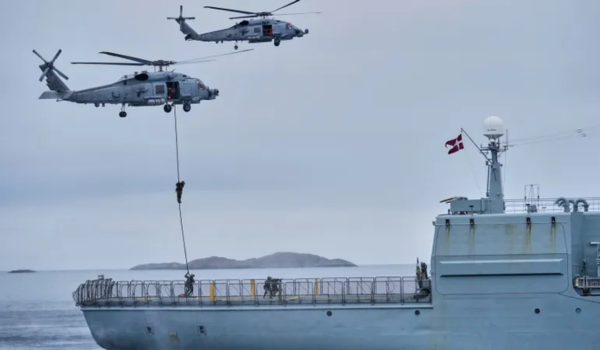
Tensions are rising in the Arctic after the United States declared that military action remains “always an option” regarding Greenland, drawing immediate criticism from European countries. The statements highlight the growing strategic importance of Greenland, which is emerging as a key geopolitical and security hotspot due to its location, natural resources, and proximity to the North American continent.
US officials emphasized that while diplomacy and negotiation remain the preferred approach, the possibility of military measures cannot be entirely ruled out. The remarks signal Washington’s intent to assert its influence in the Arctic region, especially as global powers increasingly focus on shipping lanes, mineral resources, and strategic positioning in the far north. Analysts suggest the statement reflects broader concerns about potential competition from Russia and China, both of which have shown heightened interest in Arctic development.
European nations, particularly Denmark and its allies, swiftly rejected the notion of threats or unilateral action. They stressed that Greenland’s autonomy and security must be respected, urging the United States to engage through diplomatic channels rather than rhetoric. Officials underscored that Greenland, while strategically significant, is part of a complex network of alliances and agreements that must be upheld to maintain regional stability.
Greenland’s significance stems not only from its proximity to North America and Europe, but also from its abundance of untapped natural resources, including rare earth minerals and potential energy reserves. Its ice-free ports are becoming increasingly valuable as new Arctic shipping lanes open due to melting ice, providing shorter routes between Europe, Asia, and North America. This growing economic and strategic importance has drawn the attention of multiple global actors.
Experts note that the US statement is a reflection of broader geopolitical competition in the Arctic. While the rhetoric may sound threatening, officials indicate that military action is largely a theoretical option meant to underscore strategic priorities. Nevertheless, such statements can escalate uncertainty, prompting neighboring countries and allies to bolster their defensive and diplomatic measures.
The European response highlights the importance of maintaining a united front on Arctic policy. By rejecting threats and emphasizing sovereignty, European nations aim to prevent unilateral moves that could destabilize the region. Analysts suggest that the situation underscores the delicate balance between asserting national interests and maintaining cooperation on security, trade, and environmental protection in the Arctic.
Beyond geopolitics, climate change plays a critical role in Greenland’s rising significance. Melting ice is creating new shipping routes and access to natural resources, increasing competition among nations eager to secure economic and strategic advantages. Observers say the Arctic will continue to be a focus of global attention, with Greenland at the center of discussions on security, trade, and environmental management.
While tensions remain high, officials on both sides indicate that behind-the-scenes discussions and negotiations are ongoing. How the US and Europe manage this delicate balance will have implications for regional security, international diplomacy, and the global energy and resource landscape in the years ahead.
For more details and the fastest updates, follow us on @namma.updates. Stay informed and stay connected.