
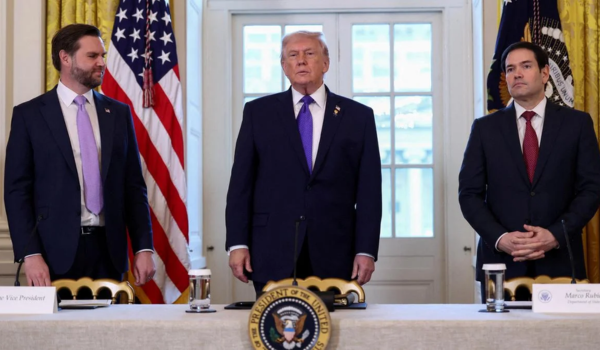
Former U.S. President Donald Trump has reignited a global debate after stating that the United States needs to own Greenland in order to prevent Russia and China from expanding their influence in the Arctic region. His remarks have once again brought Greenland’s strategic importance into sharp international focus, raising questions about security, sovereignty, and great-power competition.
Trump argued that Greenland’s geographic location makes it a critical asset for U.S. national security. Situated between North America and Europe, the massive Arctic island plays a key role in monitoring northern sea routes and missile defense systems. According to Trump, relying on military access agreements or leasing arrangements is not enough to secure long-term American interests. He emphasized that full ownership would provide stronger control and ensure that rival nations are kept at bay.
The former president expressed concern that Russia and China are steadily increasing their presence in the Arctic. Russia has been expanding its military infrastructure across the region, while China has shown growing interest through economic investments, research initiatives, and long-term strategic planning. Trump warned that if the U.S. does not act decisively, these powers could gain an upper hand in a region that is becoming increasingly important due to climate change and emerging trade routes.
Trump’s comments suggest that he views Greenland not only as a military outpost but also as a long-term strategic buffer. Melting Arctic ice is opening new shipping lanes and unlocking access to valuable natural resources such as rare earth minerals, oil, and gas. Control over these resources, he believes, could shape global economic and political power for decades to come.
The idea of U.S. ownership of Greenland has been controversial since Trump first raised it during his presidency. Greenland is an autonomous territory within the Kingdom of Denmark, and both Danish and Greenlandic leaders have consistently stated that the island is not for sale. Trump’s renewed push has therefore sparked diplomatic unease in Europe, with many leaders stressing the importance of respecting sovereignty and international norms.
Despite the criticism, Trump defended his position by framing it as a matter of global security rather than territorial ambition. He maintained that American leadership in the Arctic is essential to maintaining stability and preventing adversarial nations from exploiting the region’s strategic value. In his view, decisive action today could prevent larger conflicts in the future.
The remarks have also fueled debate within the United States. Supporters argue that strengthening America’s Arctic footprint is a practical response to evolving geopolitical realities. They see Greenland as a vital piece of the defense puzzle at a time when global power dynamics are shifting rapidly. Critics, however, caution that pushing for ownership could strain alliances, especially with European partners, and undermine cooperative security frameworks.
Greenland’s role in global politics has grown significantly in recent years. Once considered remote and isolated, the island is now at the center of international attention due to climate change, technological advances, and heightened military interest in the Arctic. Trump’s comments reflect a broader shift in how major powers view the region no longer as a frozen frontier, but as a strategic crossroads.
As discussions around Arctic security continue to evolve, Trump’s statement has ensured that Greenland remains firmly in the spotlight. Whether his remarks translate into concrete policy or remain part of broader political rhetoric, they have underscored the increasing importance of the Arctic in global geopolitics and the growing competition among world powers to shape its future.
For more details and the fastest updates, follow us on @namma.updates. Stay informed and stay connected.