
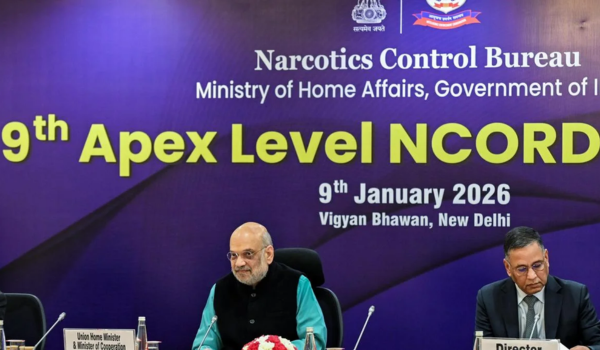
The campaign is also expected to bring stronger coordination between the Centre and state governments. Officials have indicated that regular reviews will be conducted to assess progress, identify emerging drug trends, and fine-tune strategies as needed. States will be encouraged to share intelligence and best practices, ensuring that successful models can be replicated across regions.
Special attention will be given to border states and coastal areas, which are often targeted by international drug syndicates. Enhanced cooperation with neighboring countries and global enforcement agencies is expected to play a role in tracking cross-border trafficking networks. The government believes that cutting off supply chains at their source is essential to reducing the availability of drugs within the country.
The three-year timeline has been designed to allow for sustained impact rather than short-term crackdowns. Authorities say the focus will be on creating long-lasting systems that continue to function even after the campaign formally concludes. This includes training law enforcement personnel, strengthening legal frameworks, and building institutional capacity to respond to evolving challenges.
Youth engagement is set to be a cornerstone of the initiative. Colleges, universities, and skill development centers will be encouraged to actively participate by organizing awareness drives and peer-led discussions. The goal is to empower young people to make informed choices and to become ambassadors of a drug-free lifestyle within their communities.
The campaign will also work closely with healthcare professionals to improve early detection of substance abuse. Doctors, counselors, and frontline health workers will receive guidance on identifying signs of addiction and referring individuals to appropriate treatment facilities. This integrated approach aims to reduce stigma and encourage people to seek help at an earlier stage.
Women and families affected by drug abuse will receive targeted support through counseling programs and community outreach initiatives. Officials acknowledge that addiction often disrupts entire households, and addressing its ripple effects is crucial for social stability. By strengthening family-based interventions, the campaign hopes to foster more resilient communities.
Economic rehabilitation is another area of focus. Skill development programs and employment opportunities will be promoted for individuals recovering from addiction, helping them reintegrate into society with dignity and confidence. The government believes that financial independence plays a critical role in preventing relapse and sustaining recovery.
Public participation has been described as vital to the campaign’s success. Citizens will be encouraged to report illegal activities and support local awareness efforts. Community vigilance, combined with institutional action, is expected to create an environment where drug trafficking and abuse are less likely to thrive.
As the launch date approaches, preparations are underway across ministries, law enforcement agencies, and civil society groups. The campaign reflects a broader vision of building a healthier and more secure India by protecting its youth and strengthening social foundations.
With a clear roadmap and a long-term outlook, the three-year nationwide drive against drug abuse represents a significant step in addressing one of the country’s most pressing social challenges. The government hopes that sustained commitment and widespread participation will help reduce addiction, disrupt criminal networks, and create a safer future for generations to come.
For more details and the fastest updates, follow us on @namma.updates. Stay informed and stay connected.