
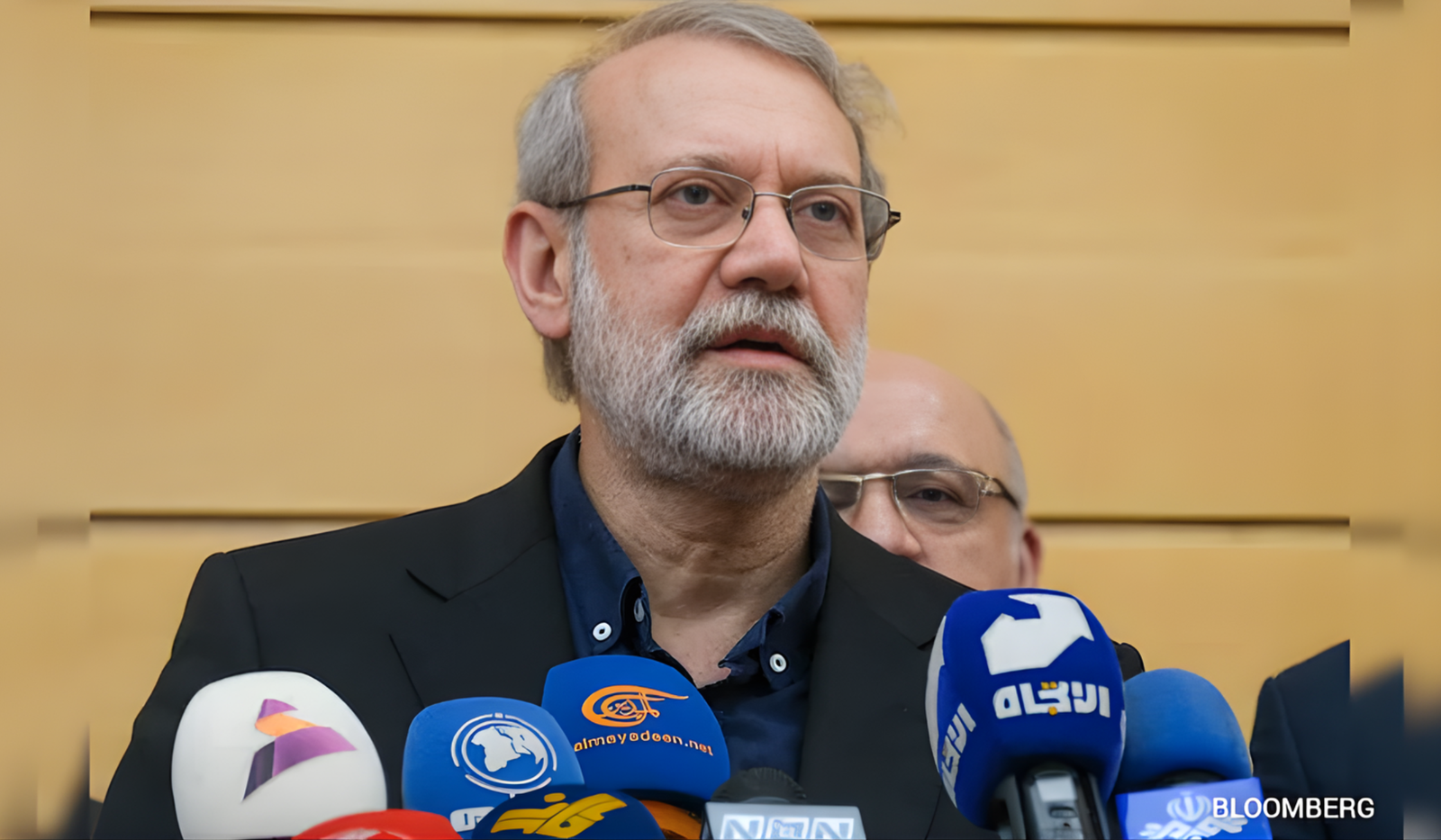
Ali Larijani, a veteran Iranian politician who played a key role in leading the country’s wartime efforts against the United States and Israel, was killed in an Israeli airstrike, Iranian state media confirmed. He was 67.
According to a statement from Iran’s Supreme National Security Council, released Tuesday and carried by state media, Larijani was killed alongside his son. The statement did not provide further details about the circumstances of his death. Earlier the same day, Israel had claimed responsibility for the overnight strike, describing Larijani as Iran’s de facto leader.
A longstanding figure in Iran’s conservative political landscape, Larijani was known for his pragmatic approach and his ability to bridge divides between hardline and moderate factions within the dominant Principlist camp. His death marks a significant loss for Iran’s leadership, further reducing its pool of seasoned senior figures relied upon to maintain the functioning of the Islamic Republic.
“Larijani had long served as a key link between Iran’s military and political leadership,” said Ellie Geranmayeh, senior policy fellow at the European Council on Foreign Relations. “He was also at the forefront of recent efforts to secure a political breakthrough with Washington.”
Larijani was appointed to a second term as Iran’s top security official in 2025, following Israel’s initial war with the country. His role grew significantly in importance after February 28, when U.S. and Israeli strikes killed Supreme Leader Ayatollah Ali Khamenei, prompting Iran’s remaining political and military leadership to adopt a strategy focused on maximum economic disruption across the region.
In an interview with Iranian state television on March 1, the second day of the war, Larijani said he believed Israel—unable to assert control over a country as large and adversarial as Iran, and lacking regional allies—was seeking to fragment and effectively dismantle the Islamic Republic. He added that the United States had become entangled in that strategy.
Decision Maker
Larijani was widely believed to have opposed the elevation of Mojtaba Khamenei to succeed his late father as supreme leader, arguing that hereditary succession contradicts the principles of the Islamic Republic.
As secretary of the Supreme National Security Council, Larijani operated at the core of Iran’s strategic decision-making system. According to Ali Alfoneh, senior fellow at the Arab Gulf States Institute, he acted primarily as a coordinator—gathering proposals from across the security establishment, presenting policy options to the leadership, and overseeing their implementation.
The United States sanctioned Larijani in January, accusing him of directing security forces in a violent crackdown on protesters during the anti-government unrest that began on December 28. According to the Human Rights Activists News Agency, at least 6,488 civilians were killed, with more than 11,000 reported cases still under review. Larijani did not publicly respond to allegations regarding his role in the suppression.
He was last seen in public on March 13 at a large, state-organized rally in central Tehran. Images of him moving through crowds as U.S. and Israeli strikes hit the city circulated widely on social media. A day later, he was among the figures named in a U.S. State Department notice offering a $10 million reward for information on the whereabouts of Iran’s leadership.
Larijani maintained close ties with the elder Khamenei, who appointed him to lead Iran’s state broadcasting authority and serve as his representative on a council tasked with resolving legislative disputes. As head of the broadcaster, he oversaw a powerful institution that monopolized the airwaves and functioned as the Islamic Republic’s primary propaganda outlet, with strong links to the intelligence and security apparatus.
During this period, he used his position to curb dissent and suppress criticism, particularly as a reformist government struggled to deliver on promises of political change.
Following rising Western concern over Iran’s nuclear program, Larijani was appointed to the country’s top national security post in 2005, where he became Iran’s chief nuclear negotiator.