
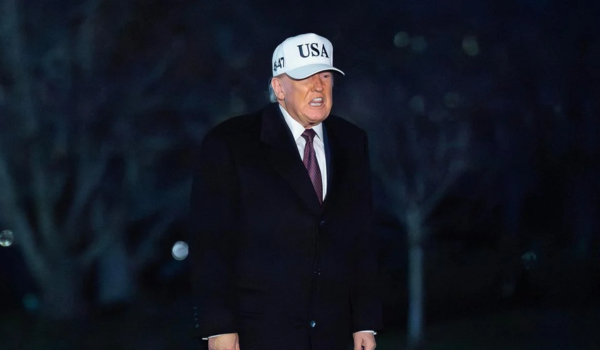
Former U.S. President Donald Trump has once again sparked global debate after posting a controversial message on his social media platform, Truth Social, in which he described himself as the “Acting President of Venezuela.” The unexpected claim quickly went viral, drawing widespread attention from political leaders, analysts, and social media users around the world.
The post featured a digitally altered image resembling an official profile, presenting Trump with the title of Acting President of Venezuela alongside his role as President of the United States. While no formal explanation accompanied the image, its timing and tone immediately raised questions about intent, legality, and political messaging.
A Post That Triggered Global Reactions:
Trump’s statement was met with a mix of confusion, criticism, and disbelief. Many observers viewed the post as highly provocative, particularly given Venezuela’s long-standing political instability and tense relationship with Washington. Social media platforms were flooded with reactions, ranging from satire and memes to serious concerns about international norms and diplomatic boundaries.
Political analysts noted that such a declaration, even if symbolic or rhetorical, risks inflaming tensions in an already sensitive geopolitical environment. Critics argue that claiming leadership over another sovereign nation, even in jest, undermines international law and established diplomatic practices.
Supporters of Trump, however, defended the post as political commentary or strategic messaging, suggesting it reflects his tough stance on authoritarian regimes and his long-standing criticism of Venezuela’s leadership.
Context Behind the Controversy:
The post comes at a time of heightened uncertainty in Venezuela, where ongoing political, economic, and humanitarian challenges have kept the country in the global spotlight. The United States has historically played a major role in Venezuelan affairs through sanctions, diplomatic pressure, and policy interventions aimed at influencing governance and democratic processes.
Trump has previously taken a hard-line approach toward Venezuela, often framing the country’s crisis as a threat to regional stability and U.S. interests. His Truth Social post appears to build on this narrative, portraying himself as a figure capable of enforcing order or overseeing a transition, though no official policy action has followed the statement.
Legal and Diplomatic Implications:
Experts emphasize that there is no legal basis under international or U.S. law for an American political leader to assume authority over another country. Venezuela remains a sovereign nation, and any change in leadership must come through its own constitutional processes.
Diplomats and foreign policy specialists warn that such statements can complicate international relations, even if they are not backed by formal action. Symbolic claims made by influential figures often carry weight, especially when amplified through social media, and can shape public perception or diplomatic responses.
Several governments have reiterated the importance of respecting national sovereignty and resolving political disputes through dialogue rather than unilateral declarations.
Social Media and Political Messaging:
The incident highlights the growing role of social media in modern politics, where a single post can dominate global headlines within minutes. Trump’s use of Truth Social as a direct communication channel allows him to bypass traditional media, but it also means statements can be interpreted in multiple ways without clarification.
Observers note that digital imagery and short messages can blur the line between satire, symbolism, and official intent, making it difficult to assess the seriousness of such claims. This ambiguity has become a defining feature of contemporary political communication.
What It Means Going Forward?
While Trump’s claim to be the “Acting President of Venezuela” has no official standing, its impact lies in the conversation it has generated. The post has reignited debates about U.S. involvement in foreign nations, the limits of political rhetoric, and the responsibilities of global leaders in the digital age.
For Venezuela, the statement adds another layer of external attention to an already complex situation. For the United States, it underscores how political messaging-especially from prominent figures can influence global narratives even without concrete policy action.
For more details and the fastest updates, follow us on @namma.updates. Stay informed and stay connected.