
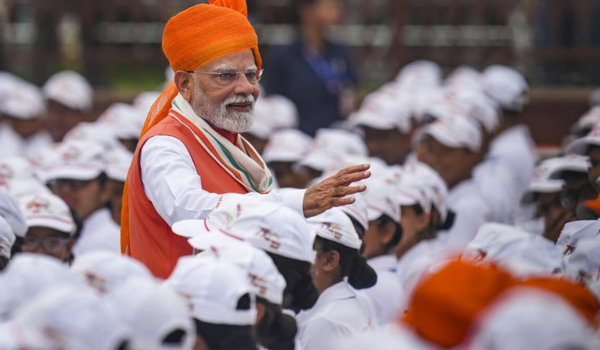
India’s vast youth population has long been seen as a source of strength and opportunity, but it is increasingly emerging as a complex political challenge for the Modi government. As aspirations rise and frustrations grow, the central question facing policymakers is whether the focus should be on genuine engagement with young Indians or tighter control over dissent and narrative.
With more than half of India’s population under the age of 30, young people play a decisive role in shaping public opinion, political outcomes, and the country’s future direction. While the government has launched multiple initiatives aimed at youth empowerment, recent trends suggest a widening gap between official messaging and the lived realities of many young Indians.
Promises, Aspirations, and Reality:
Over the past decade, the government has highlighted programs focused on skill development, entrepreneurship, digital innovation, and national pride. Campaigns promoting startups, self-reliance, and technological advancement have been framed as pathways for young Indians to succeed in a rapidly changing global economy.
However, rising unemployment, competitive examinations, delayed recruitment processes, and concerns over education quality have led to growing unease among sections of the youth. For many, especially in urban and semi-urban areas, aspirations fueled by social media and global exposure are colliding with limited job opportunities and economic uncertainty.
Youth as Supporters and Critics:
India’s youth are not a monolithic group. While a significant section continues to support the government’s vision of strong leadership and national identity, another segment has become increasingly vocal about issues such as employment, freedom of expression, and institutional fairness.
Student protests, online campaigns, and critical discussions on digital platforms highlight a generation that is more connected, informed, and willing to question authority. This has created a delicate balancing act for the government-how to maintain political stability while responding to legitimate concerns raised by young citizens.
Engagement or Regulation?
Critics argue that the government has leaned more towards regulation and control, particularly in managing protests, campus politics, and online discourse. Supporters, on the other hand, say firm governance is necessary to prevent misinformation, unrest, and external influence.
The challenge lies in ensuring that measures aimed at maintaining order do not alienate young people or suppress constructive debate. Analysts note that long-term political stability depends not just on discipline, but on trust and inclusion.
The Road Ahead:
As India moves deeper into the digital age, youth engagement is no longer limited to rallies or policy announcements. Young Indians expect transparency, responsiveness, and meaningful participation in decision-making. Governments that fail to adapt risk losing credibility with a generation that values dialogue as much as development.
The Modi government’s approach to youth-whether it prioritises collaboration or control-could shape not only electoral outcomes but also India’s social and democratic fabric in the years ahead.
A Defining Moment:
The youth question represents one of the most defining challenges for the current political leadership. Successfully engaging young Indians requires more than slogans and schemes; it demands listening, adapting, and addressing the structural issues that affect their futures.
As expectations rise and voices grow louder, the answer to whether the government chooses engagement over control may ultimately determine how India’s next generation views power, participation, and democracy itself.
For more details and the fastest updates, follow us on @namma.updates. Stay informed and stay connected.