
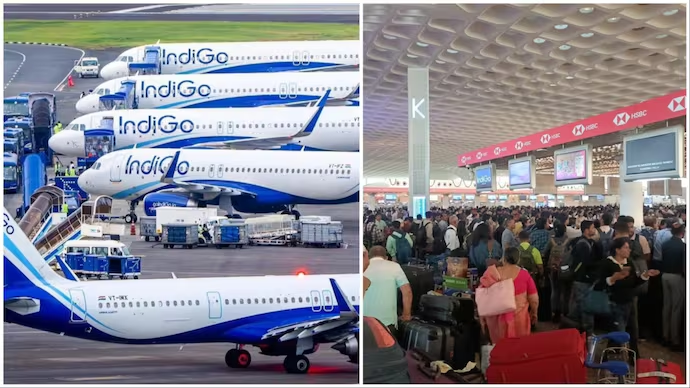
Domestic airline IndiGo cancelled more than 300 flights across Mumbai, Delhi, and Bengaluru on Thursday, marking the third straight day of disruptions caused by a shortage of crew following the implementation of new flight-duty and rest-period regulations for pilots, according to PTI sources.
IndiGo’s statement:
The airline acknowledged that its operations had been “significantly disrupted” over the last two days and issued an apology to passengers. IndiGo said it has begun making “calibrated adjustments” to its schedules to control the situation and restore normalcy. These temporary measures will continue for the next 48 hours to help stabilise operations and gradually improve punctuality across its network. The airline added that its teams are working continuously to assist affected travellers with rebooking options or refunds as services steadily return to normal.
Overall, the recent disruptions have served as a major wake-up call for IndiGo and the Indian aviation sector. While safety rules require stricter pilot-rest norms – and rightly so – airlines must adapt their operations without allowing schedules to collapse. For passengers, the episode has brought significant stress and inconvenience. For the industry, it has exposed the need for better planning, stronger crew-management systems, and more transparency during crises. As IndiGo works to restore its operations in the coming days, all eyes will be on how quickly and effectively the airline recovers and how the DGCA responds to ensure such large-scale disruptions are not repeated.
✈️ What Happened – A Larger Breakdown
The disruption at IndiGo wasn’t restricted to a few sporadic cancellations. Over a span of 48-72 hours, hundreds of domestic and international flights were scrapped or delayed across major hubs including Delhi, Mumbai, Bengaluru and a number of secondary airports nationwide. For many passengers, this meant cancelled itineraries, missed connections, uncertainty over bookings, and a scramble for alternate travel arrangements.
Given that IndiGo operates a large share of the country’s air traffic, the ripple effect was substantial. Flights not only to and from major metros but also to smaller regional cities were impacted, compounding inconvenience especially for passengers travelling for essential reasons such as business, medical emergencies or time-sensitive family obligations.
Many passengers found themselves stuck at airports – sometimes overnight – with limited support for rebooking or accommodation. The backlog of stranded flyers led to long queues, aggravated by the sheer volume of people attempting to rebook, get refunds or make alternate travel plans.
🚨 Underlying Causes: Why Did This Happen?
While the airline has not shared exhaustive details, several interlinked factors contributed to the chaos:
- Crew-availability crisis: The root cause appears to be a sudden shortage of available pilots and cabin crew. Given recent regulatory changes in duty-time and mandatory rest periods, crew scheduling has become more complex. Airlines now must adhere strictly to “flight-duty limitations” and ensure adequate downtime between flights – something that has evidently strained IndiGo’s roster management.
- Cascading reschedules: Once an initial set of flights got cancelled or delayed, the disruption propagated – crew meant for later flights got stranded, turning what could’ve been a limited disruption into a far wider network collapse.
- Peak-season & increased demand: The ongoing holiday and travel season likely added pressure. With more bookings and increased load on planes and crew alike, the window for scheduling flexibility narrowed, giving less room to absorb the shock of cancellations.
- Logistical & operational rigidity: The airline industry runs on tight schedules, especially for a low-cost, high-frequency carrier like IndiGo. With limited spare aircraft, tightly packed turnarounds, and minimal buffer time between flights, even a small crew shortage can trigger a domino effect.
🔧 IndiGo’s Response: Mitigation Measures
In response, IndiGo announced that it has begun “calibrated adjustments” to its schedule, aiming to contain further disruptions and bring operations back to normal over the next 48 hours. The plan includes:
- Prioritising flights on major routes to minimize disruption to the maximum number of passengers.
- Temporarily cutting down on frequency for less-critical or low-demand routes, thereby freeing up crew and aircraft for critical sectors.
- Offering alternate flight options or full refunds to affected passengers, as well as personalized rebooking, customer support hotlines, and sometimes accommodation assistance if overnight delays occur.
- Working round-the-clock in operations and crew rostering to get back to reliable, consistent service levels.
The airline’s public apology and commitment to stabilise operations reflect the seriousness of the situation – but for many travellers, the inconvenience may have already caused significant disruptions to personal and professional plans.
What the DGCA Probe Means?
With the DGCA stepping in, the airline may be asked to provide complete logs and data about crew duty-hours, rest periods, flight rosters, cancellations, and the reasons for each disruption. Depending on the findings, consequences could range from mandatory changes to crew-roster policies, stricter regulatory oversight, or even fines or penalties if norms were found to be violated.
More broadly, this probe serves as a warning not just to IndiGo, but to all Indian carriers – enforcing compliance with safety and labour regulations may come at a short-term cost to operations. It also underscores that airlines must plan for contingencies, especially when regulations change.
🎯 What This Means for Travellers (and What You Can Do)?
For passengers, this situation is a reminder to stay vigilant and plan ahead:
- Check your flight status early and often – especially if you’re travelling in the next few days. Reconfirm bookings, monitor emails/texts from the airline, and avoid leaving for the airport until you’re certain the flight is operational.
- Allow buffer time between connections – especially when travelling via hubs known to be affected. Tight layovers may no longer be reliable.
- Have a backup plan – look at alternate flights (with IndiGo or other airlines), rail or bus options, and refundable hotel bookings.
- Keep documentation handy – booking confirmations, cancelled flight notifications, receipts for extra expenses – in case you need to claim refunds or compensation.
- Be patient and persistent – call customer-service hotlines, use support desks at airports, and politely insist on rebooking or refund. Many airlines prioritise customers with immediate travel needs or long delays.