
Since the war started, the US and Gulf nations have used high-cost air defence systems to bring down low-cost Iranian drones, leading to bills worth tens of billions. A country with a cheaper, smarter solution has now stepped forward.
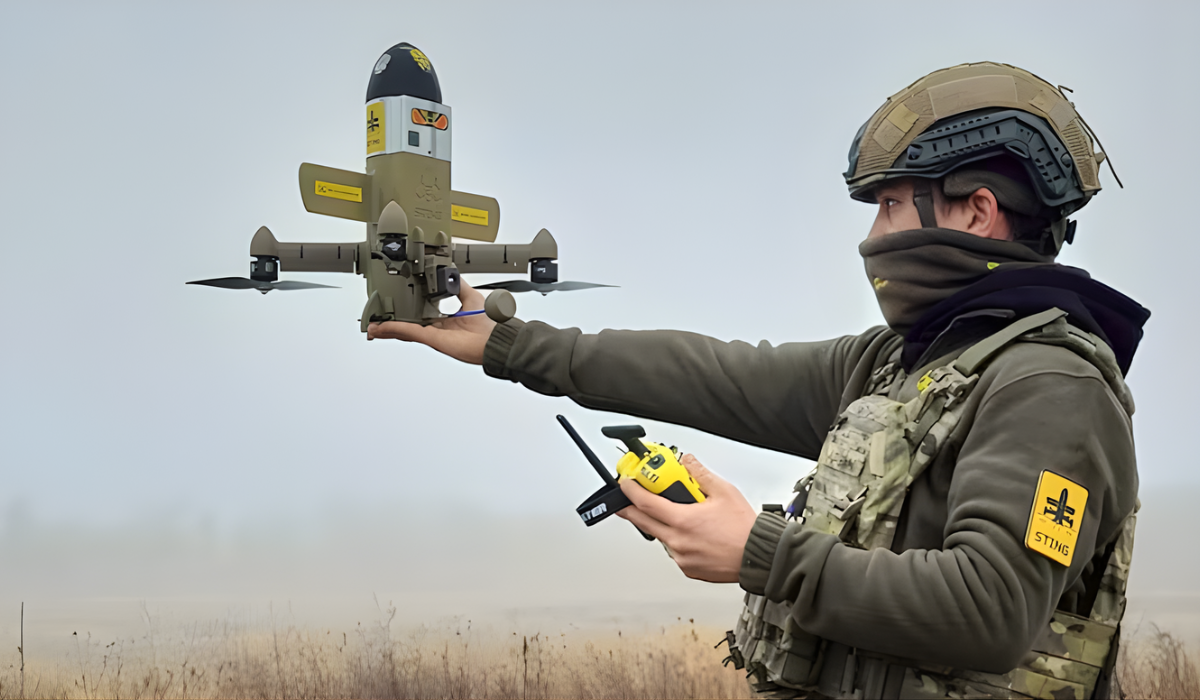
In recent weeks, the sound of Iran’s Shahed drones has spread anxiety across the Gulf. As Iran uses these inexpensive drones effectively, the US has been forced to deploy costly missiles to defend its installations. Support has now arrived from an unlikely country 4,500 km away: Ukraine, drawing on years of combat experience and its production of affordable “Sting” and “Bullet” interceptors.
The situation has shifted rapidly. Just weeks ago, at the start of the conflict, US President Donald Trump said he would never seek help from Ukrainian President Volodymyr Zelenskyy. Now, a month later, as Iran continues to strike US bases and energy infrastructure in the Middle East and costs soar into the tens of billions, Gulf nations are turning to Ukraine for guidance on countering Shahed drones.
Over the weekend, Volodymyr Zelenskyy received a red-carpet welcome in Qatar, the United Arab Emirates, and Saudi Arabia – despite his signature no-suit appearance. Agreements were signed under which Ukraine will supply its “Sting” interceptors and share battlefield expertise in exchange for advanced air-defence missiles to counter Russia.
Ukraine has already sent more than 200 anti-drone specialists to the Middle East to assist Jordan and Kuwait in countering Shahed drones – often dubbed “flying mopeds” for their motorcycle-like buzzing sound.
Why Gulf Nations Are Turning to Ukraine
This raises a key question: why has Ukraine suddenly become so important to the Gulf? The answer lies in economics – the rising financial burden of war. The Middle East conflict has revealed that while attacks are becoming cheaper, defence is growing significantly more expensive.
Consider this: Iran’s Shahed-136 – its flagship drone – has been deployed in large numbers against US targets, costing roughly $20,000–$30,000 (Rs 18–28 lakh) per unit, with the capacity to be mass-produced in the thousands each month.
These low-cost drones and missiles have reportedly made 13 US military bases “uninhabitable,” causing losses of up to $2.9 billion (Rs 2.41 lakh crore) within just the first three weeks, according to a Wall Street Journal report.
To counter these drones, the US and its Gulf allies have relied on Patriot missiles – each costing around $4 million (Rs 3.3 crore)-as well as expensive THAAD systems. However, stocks of these interceptor missiles are now running low.
In addition, Gulf states have deployed advanced fighter jets like the F-16. Reports suggest that operating an F-16 costs over $25,000 per hour, with the cost rising further when missiles are fired to intercept drones.
Ukraine faced a similar challenge nearly four years ago, when Russia – backed by Iran-used Shahed drones extensively during its invasion, forcing Kyiv to urgently seek assistance from Europe and the US.
Ukraine’s Sting and Bullet Systems Take on Shahed Drones
However, Ukraine did not receive sufficient advanced weaponry from the West and chose to act independently. After two years of effort, it developed what are now called “Shahed killers,” based on a simple idea: counter cheap drones with even cheaper and smarter ones.
Ukraine’s Sting and Bullet interceptors – built using off-the-shelf components at a fraction of traditional costs – have destroyed thousands of Russian Shahed drones since mid-2025, achieving a success rate of 70–90%. A The New York Times analysis found that Ukraine intercepted 87% of the 5,000 drones launched by Russia in February this year.
These systems are operated via FPV (first-person view) goggles, allowing human operators to guide them in real time and avoid jamming or technical errors.
The Sting interceptor is the fastest and most lethal, reaching speeds of 315–340 km/h and operating at altitudes of up to 10,000 feet. Equipped with thermal imaging, it can strike targets with precision and return to base if none are detected.
The Bullet, powered by a jet engine and four rotors, can be 3D-printed and uses AI to identify targets. It travels at speeds between 130–309 km/h. Other models such as P1-Sun, Octopus 100, and ODIN WinHit are also being used to counter Shahed drones.