
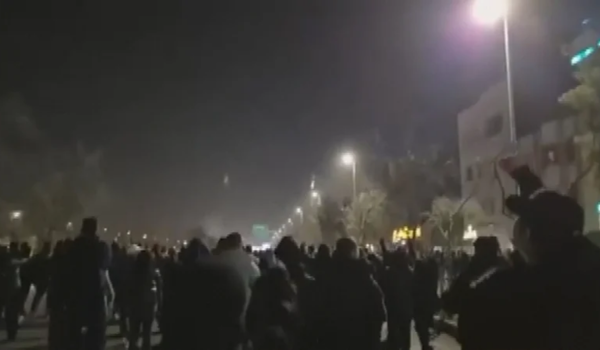
In cities across Iran, a fresh surge of protests has erupted, with thousands of people taking to the streets despite government efforts to clamp down on communication by sharply restricting internet access. The latest unrest highlights the deepening frustration felt by many Iranians and underscores how rapidly public dissent is spreading even in the face of barriers meant to silence it.
Residents in several major urban centers reported large crowds gathering in central squares, chanting slogans and calling for political change. The demonstrations come at a time when access to social media and messaging apps is severely limited or completely blocked, making it difficult for protestors to organize and share information. Yet, the rallies have continued to grow, demonstrating the determination of people on the ground to voice their grievances.
Eyewitnesses describe scenes of passionate crowds, some waving flags or holding handmade signs, as they march through city streets. Despite the internet shutdown, news of protests appears to be spreading through word of mouth and alternative communication channels, creating a sense of momentum that authorities are struggling to contain.
The reasons behind the protests are complex, but they reflect long-standing frustrations over economic hardship, political freedoms, and a sense of disconnect between the government and ordinary citizens. For many participants, the demonstrations represent a rare opportunity to express deep-seated concerns about their lives and future prospects.
Security forces have been visible in many areas, with reports of clashes between demonstrators and police or paramilitary units. Witnesses have described scenes in which officers attempt to disperse crowds, but protestors have often regrouped and continued their marches. In some neighborhoods, makeshift barriers or local residents themselves have blocked roads in defiance of efforts to quell the unrest.
The government’s decision to curb internet access appears to be an attempt to disrupt the protests by slowing the spread of information. However, this restriction has also compounded the anxieties of many ordinary citizens who rely on digital communication for their daily lives. With online connectivity limited, people are turning to creative workarounds or relying on traditional means of communication to share updates with friends and family.
Despite these restrictions, videos and photos of demonstrations have circulated via offline methods, allowing the broader public to witness events as they unfold. This has contributed to a feeling of solidarity among protestors in different cities, reinforcing a sense of collective purpose even as authorities try to suppress coverage.
Local business owners and residents in protest hotspots say the demonstrations have had a noticeable impact on daily life. Some shops have closed early, and traffic patterns have shifted as people avoid central areas where large crowds are gathering. Still, the mood among many of those taking part is resolute, with participants saying their desire for change outweighs concerns about inconvenience or risk.
Analysts observing the situation note that the persistence of the protests in spite of communication blackouts suggests a significant shift in public sentiment. Many Iranians, particularly younger generations, are increasingly willing to challenge restrictions and voice their perspectives publicly, even when traditional avenues for expression are limited.
In response to the unrest, government officials have called for calm and urged citizens not to participate in actions they describe as destabilizing. At the same time, state media have offered limited coverage of the demonstrations and events related to them, focusing instead on official statements and warnings against violence.
The international community has been watching events in Iran closely, with global observers expressing concern about the potential for further escalation. However, the evolving dynamics on the ground are being shaped largely by the actions and decisions of ordinary Iranians — people who are stepping forward to make their voices heard in an environment where doing so comes with real challenges.
As the situation continues to develop, the resilience of protestors in maintaining momentum despite internet shutdowns will likely remain a focal point of coverage. For many inside the country, the demonstrations represent more than isolated protests; they are seen as part of a broader struggle for greater freedoms, accountability, and a future that reflects the aspirations of a diverse population.
For more details and the fastest updates, follow us on @namma.updates. Stay informed and stay connected.