
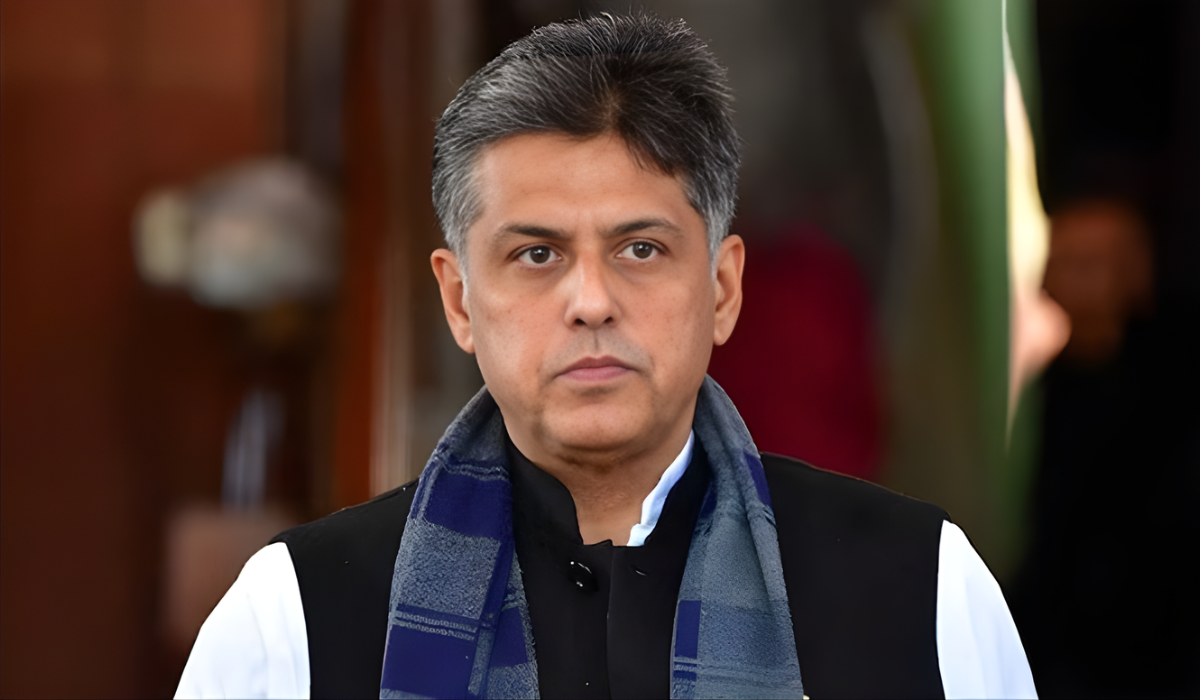
A new divide has emerged within the Congress over India’s response to the escalating West Asia conflict, with senior leaders Manish Tewari and Shashi Tharoor supporting the center’s cautious approach, even as the party leadership intensifies its criticism.
Congress MP Manish Tewari defended the government’s position, stating that India has limited stakes in the region’s conflicts and should adopt a careful stance.
He said it is important to recognize that West Asia is not witnessing a single conflict but multiple wars unfolding simultaneously.
Describing the Iran-Israel-United States conflict as highly complex, Manish Tewari said it is not India’s war, noting that the country has historically remained a marginal player in the broader Middle East.
He added that India’s current stance reflects strategic thinking, emphasizing that exercising caution is the right approach, as it aligns with the principle of strategic autonomy-protecting national interests while carefully navigating global tensions.
Shashi Tharoor also backed the government’s handling of the situation, calling it an exercise in “responsible statecraft” rather than a lapse in moral positioning.
In a newspaper column, he noted that although the conflict raises concerns under international law, India’s restraint demonstrates “strategic prudence and a clear-eyed assessment of national interest.” He further said that silence should not be interpreted as support for military action and warned against what he termed rhetorical moralism.
These remarks differ from the stance of the Congress leadership. Party president Mallikarjun Kharge, along with Rahul Gandhi, Jairam Ramesh and Pawan Khera, have raised questions over the government’s response, particularly regarding Israeli military actions and reports of targeted killings in Iran.
Rahul Gandhi has argued that India must clearly oppose unilateral military action, while other leaders have cautioned that remaining silent could weaken the country’s long-standing foreign policy principles.
Since the conflict escalated, India has consistently called for dialogue and diplomacy, while also condemning Iranian strikes across the Gulf. At the same time, New Delhi has intensified engagement with Tehran to secure oil and gas supplies through the Strait of Hormuz, a vital global energy route.
This is not the first instance of differences within the Congress on foreign policy. Similar tensions surfaced during Operation Sindoor, when Shashi Tharoor’s support for the government’s diplomatic outreach drew criticism from within the party.
With the West Asia conflict now in its third week following coordinated strikes by the United States and Israel on February 28 and Iran’s subsequent retaliation, the divisions within the Congress once again highlight the challenge of balancing political messaging with strategic realities.