
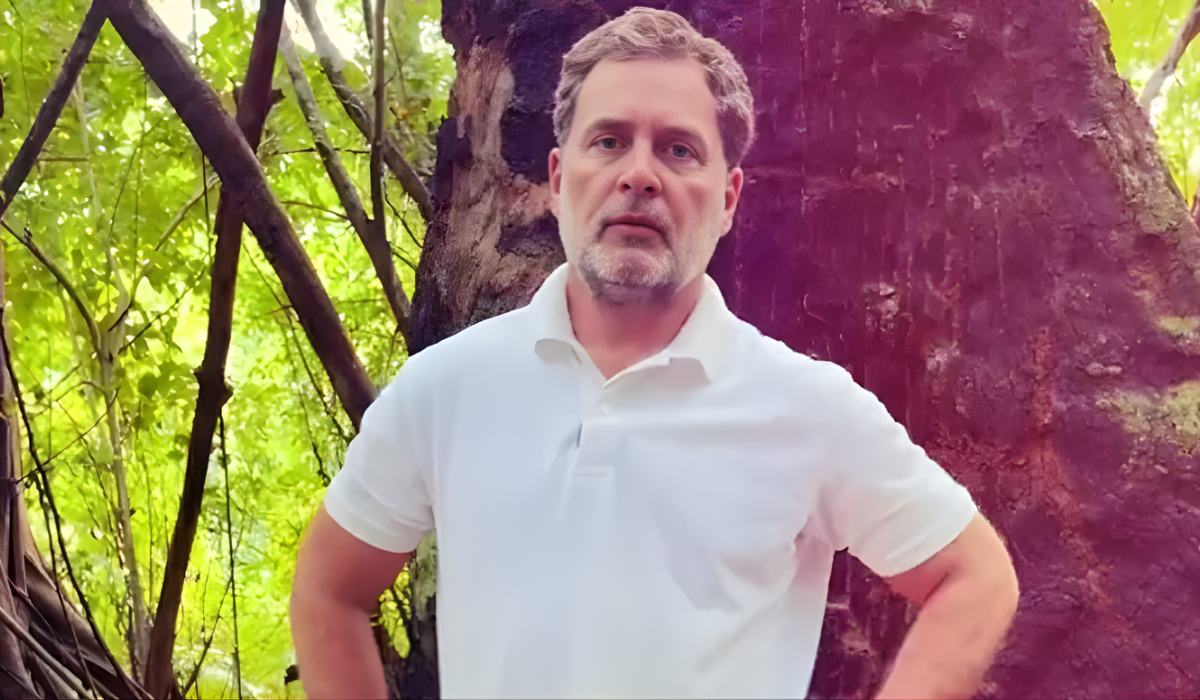
Rahul Gandhi criticised the Centre’s mega project on Great Nicobar Island, calling it a direct attack on fragile ecosystems and indigenous communities. He argued that the potential environmental damage and risks of displacement far outweigh any projected strategic or economic benefits.
Rahul Gandhi, Leader of the Opposition in the Lok Sabha, on Wednesday criticised New Delhi’s ambitious ₹81,000 crore strategic infrastructure project in Great Nicobar Island, calling it “one of the biggest scams and a grave crime against the country’s natural environment and tribal heritage in our lifetime.”
Rahul Gandhi, currently visiting the island, said the Centre’s ambitious project there is nothing more than “destruction dressed in the language of development.”
Rahul Gandhi took to X, saying, “The government describes this as a ‘project,’ but what I’ve seen is far from that. It is millions of trees marked for felling, 160 square kilometres of rainforest facing destruction, and communities being overlooked as their homes are taken away.”
During his visit to the forests of Great Nicobar Island, Rahul Gandhi described the trees as “older than memory.”
He added that forests nurtured over generations, along with the “beautiful” communities living there, are being deprived of what is rightfully theirs.
Rahul Gandhi reiterated, “The government calls this a ‘project,’ but what I’ve witnessed is far from that – it is millions of trees marked for felling, 160 square kilometres of rainforest facing destruction, and communities being ignored as their homes are taken away.”
At the centre of the controversy is the clearance granted by the National Green Tribunal for the mega infrastructure project, which the Congress had earlier criticised as “half-baked” and “ill-conceived.”
The proposal to develop a transshipment and logistics hub at the southernmost tip of the Andaman and Nicobar Islands has also drawn objections from Sonia Gandhi, who urged the Centre to reconsider, citing concerns over the region’s rich biodiversity and indigenous communities.
The island, located roughly 900 kilometres across the sea from the Strait of Malacca, holds major strategic importance, with both India and China viewing it through a geopolitical lens as they respond to Beijing’s String of Pearls approach in the Indian Ocean.
However, experts note that the project could attract investment, enhance trade, and bolster maritime strength – similar to how Hong Kong contributed to China’s economic rise.
In an op-ed last year, Sonia Gandhi described the initiative as a “series of planned misadventures” that could ultimately displace the island’s indigenous tribal communities.