
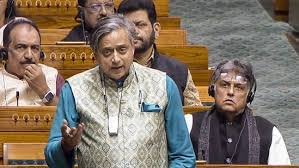
Congress MP Shashi Tharoor has criticised the proposed G-RAMG Bill, which is being considered as a replacement for the Mahatma Gandhi National Rural Employment Guarantee Act (MGNREGA). Objecting to the use of religious symbolism in naming the new scheme, Tharoor said, “Ram ka naam badnaam mat karo”, stressing that faith should not be used to justify policy changes affecting livelihoods.
MGNREGA, launched in 2005, is one of India’s most significant rural employment programmes, guaranteeing wage employment to millions of households. Tharoor described the scheme as a crucial safety net that has supported rural families during economic crises, including the COVID-19 pandemic. He warned that replacing it without clear safeguards could weaken employment security in villages.
The Congress leader argued that welfare programmes should be evaluated on performance and outcomes rather than branding. According to him, invoking Lord Ram’s name risks diverting attention from serious questions about how the proposed G-RAMG Bill would function and whether it would offer the same legal guarantees as MGNREGA.
Tharoor also raised concerns about the broader implications of dismantling a rights-based scheme. He said MGNREGA provides not just income but dignity of labour and financial stability to rural workers, particularly daily-wage earners and migrant labourers. Any move to dilute or replace it, he cautioned, could have long-term social and economic consequences.
The proposed bill has triggered political debate, with opposition parties accusing the government of attempting to rebrand welfare policies while weakening their core commitments. Critics argue that MGNREGA’s challenges lie in implementation and funding delays rather than in the concept itself.
Tharoor’s remarks have added to the ongoing discussion on governance and public policy, especially regarding the use of religious symbolism in state programmes. He maintained that effective governance should focus on strengthening existing systems and ensuring accountability, rather than prioritising symbolic narratives.
As discussions around the G-RAMG Bill continue, opposition leaders are calling for greater transparency and parliamentary scrutiny. The future of MGNREGA remains uncertain, but the controversy has brought renewed attention to the importance of protecting rural employment and social security.
For more details and the fastest updates, follow us on @namma.updates. Stay informed and stay connected.