
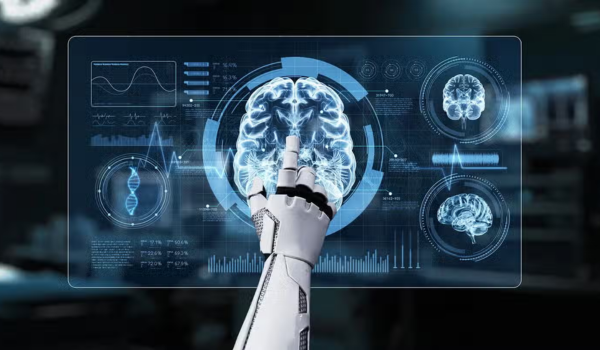
In a major advancement for medical technology, scientists have developed a powerful artificial intelligence (AI) system capable of analyzing brain MRI scans within seconds, achieving an impressive accuracy rate of 97.5%. The breakthrough is expected to significantly improve the speed and reliability of diagnosing neurological conditions, offering hope for faster treatment and better patient outcomes.
Magnetic Resonance Imaging (MRI) plays a crucial role in detecting brain abnormalities such as tumors, strokes, hemorrhages, and degenerative disorders. However, interpreting MRI scans can be time-consuming and requires highly trained specialists. The newly developed AI model is designed to assist radiologists by rapidly scanning images, identifying patterns, and highlighting potential areas of concern with remarkable precision.
How the AI Model Works?
The advanced AI system uses deep learning algorithms trained on thousands of brain MRI images. By learning from vast datasets, the model can recognize subtle changes in brain structure that may indicate disease. Within seconds of processing a scan, the AI generates diagnostic insights, helping doctors make quicker and more informed decisions.
Researchers say the 97.5% accuracy rate demonstrates the system’s reliability, placing it close to and in some cases matching expert-level analysis. While the AI is not intended to replace medical professionals, it serves as a powerful support tool, reducing workload and minimizing the risk of human error.
Transforming Healthcare and Emergency Care:
One of the most promising aspects of this innovation is its potential impact in emergency situations. Conditions such as strokes or brain injuries require immediate attention, and faster diagnosis can mean the difference between life and death. With near-instant analysis, hospitals can accelerate treatment planning and improve survival rates.
The AI tool could also be particularly beneficial in regions facing shortages of trained radiologists. By providing automated assistance, healthcare facilities in remote or underserved areas may gain access to high-quality diagnostic support.
Improving Accuracy and Efficiency:
Apart from speed, the system enhances consistency in medical imaging interpretation. Traditional diagnosis may vary slightly depending on the experience of the radiologist, but AI-based evaluation offers standardized results based on learned data patterns. This consistency can contribute to better long-term patient monitoring and follow-up care.
Healthcare experts believe this development represents another step forward in integrating artificial intelligence into mainstream medicine. As AI continues to evolve, its role in medical imaging, disease detection, and predictive healthcare is expected to expand further.
The Future of AI in Medical Imaging:
The successful implementation of this brain MRI analysis system highlights the growing collaboration between technology and healthcare sectors. Researchers are optimistic that similar AI models could soon be adapted for diagnosing other conditions, including heart diseases, lung disorders, and cancer.
With a 97.5% precision rate and the ability to deliver results in seconds, this AI-powered solution marks a significant milestone in modern medicine bringing faster diagnoses, improved efficiency, and enhanced patient care closer to reality.
For more details and the fastest updates, follow us on @namma.updates. Stay informed and stay connected.