
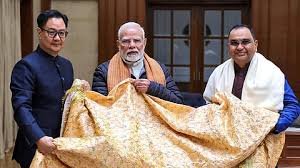
A petition has been filed before the Supreme Court of India challenging the traditional chadar offering made on behalf of Prime Minister Narendra Modi at the Ajmer Sharif Dargah. The plea seeks a direction to stop the ceremonial practice, arguing that participation by a serving prime minister in a religious ritual raises constitutional concerns.
The petition was mentioned before the apex court seeking urgent consideration ahead of the annual Urs at the revered Sufi shrine in Rajasthan. However, the court declined to take up the matter for immediate hearing, allowing the long-standing tradition to continue for now.
What the Petition Argues:
According to the plea, the Prime Minister’s official association with a religious offering may blur the line between the state and religion. The petitioner has contended that such practices could go against the spirit of secularism enshrined in the Constitution, especially when carried out in an official capacity.
The plea also raises concerns about the precedent it sets and calls for a clear separation between government authority and religious customs.
Tradition and Historical Context:
Offering a ceremonial chadar at Ajmer Sharif Dargah during the Urs of Khwaja Moinuddin Chishti has been a long-standing tradition, followed by leaders across political parties for decades. The gesture is widely seen as symbolic of communal harmony and respect for India’s pluralistic culture.
The chadar is usually sent by the Prime Minister and presented at the shrine by a Union minister or official representative.
Court’s Stand So Far:
With the Supreme Court declining to grant an urgent hearing, the customary chadar offering is expected to proceed as scheduled during the Urs celebrations. The matter may be examined later if the court agrees to hear the petition in detail.
Public and Political Reactions:
The plea has sparked debate, with differing opinions emerging from legal experts, political observers, and the public. While some support a stricter interpretation of secular principles, others view the petition as unnecessary interference in a cultural practice that promotes unity and harmony.
What’s Next?
The Supreme Court’s future decision on whether to hear the plea could have broader implications on how constitutional authorities engage with religious traditions. Until then, the practice remains unchanged.
For more details and the fastest updates, follow us on @namma.updates. Stay informed and stay connected.