
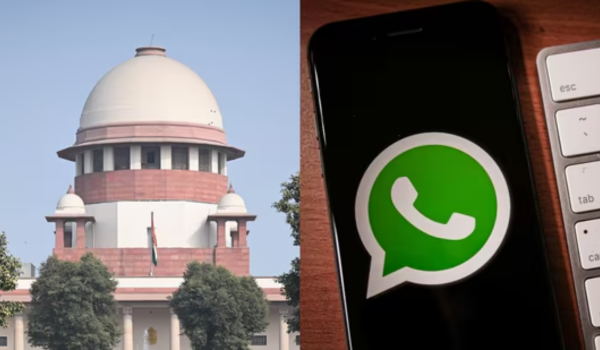
The Supreme Court of India has taken a strong stand against WhatsApp and its parent company Meta over their controversial “take-it-or-leave-it” privacy policy, raising serious concerns about user rights and data protection in the country. The top court made it clear that digital platforms cannot force users to accept one-sided terms that may compromise their privacy, especially in a country where millions depend on such apps for daily communication.
During the hearing, the judges questioned whether users truly have a real choice when a platform makes acceptance of its privacy policy mandatory to continue using the service. The court observed that such policies place ordinary users in a difficult position—either agree to extensive data-sharing terms or lose access to a widely used communication tool. This, the bench noted, could be unfair and against the spirit of informed consent.
The case revolves around WhatsApp’s updated privacy policy introduced earlier, which sparked widespread debate and concern among users. Critics have argued that the policy allows greater sharing of user data within the Meta group of companies and does not offer meaningful options to opt out. The Supreme Court echoed these concerns, stressing that personal data and privacy cannot be treated casually or used purely for business advantage.
The judges also pointed out that not all users are legally or digitally aware enough to fully understand complex privacy policies. In such a situation, placing the entire burden on users to either accept or reject the terms may not be reasonable. The court underlined that consent must be genuine, informed, and freely given not forced by circumstances.
Another key issue discussed was the dominance of WhatsApp in India’s messaging space. With such a massive user base, the platform plays an important role in everyday communication for individuals, businesses, and even government-related interactions. The court indicated that companies holding this kind of influence must act responsibly and cannot impose conditions that could potentially harm user interests.
The Supreme Court also signaled that user privacy is closely linked to fundamental rights and deserves strong legal protection. The bench made it clear that commercial interests cannot override the right to privacy and data protection of citizens. It emphasized that technology companies operating in India must respect local laws and constitutional values.
Taking note of the seriousness of the matter, the court announced that it will pass an interim order on February 9. This temporary order could set important guidelines or restrictions on how WhatsApp and Meta handle user data while the case continues. The final outcome of the case is expected to have a significant impact on how digital platforms design their privacy policies in the future.
The case is being closely watched by privacy advocates, legal experts, and millions of users across the country. Many believe the Supreme Court’s decision could become a landmark moment for digital privacy in India, setting clearer rules for how tech companies collect, use, and share personal data.
As concerns over data security and online privacy continue to grow, the court’s firm approach sends a strong message: user rights cannot be ignored in the name of technology or business growth. The upcoming interim order on February 9 is now expected to play a crucial role in shaping the future of data protection and digital rights in India.
For more details and the fastest updates, follow us on @namma.updates. Stay informed and stay connected.