
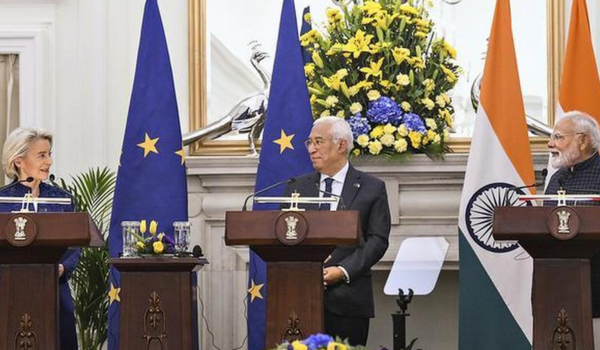
Global medical humanitarian organisation Médecins Sans Frontières (MSF) has expressed strong concern over a proposed free trade agreement (FTA) with the European Union, warning that certain clauses in the deal could threaten access to affordable medicines in India and across many developing countries.
In a letter to European authorities, MSF said the trade agreement could weaken the production and supply of low-cost generic medicines that millions of patients rely on for life-saving treatment. The organisation stressed that India plays a critical role in global healthcare, often referred to as the “pharmacy of the developing world” because of its large-scale production of affordable generic drugs.
These medicines are widely used to treat serious diseases such as HIV/AIDS, tuberculosis, cancer, and hepatitis in low- and middle-income countries. According to MSF, any trade rules that make it harder or slower to produce these medicines could lead to higher prices and reduced availability, putting enormous pressure on already stretched public health systems.
One of the main concerns raised is the possibility of stricter intellectual property and patent-related rules being included in the trade deal. MSF argues that such provisions can delay the entry of cheaper generic versions of medicines into the market, allowing branded drugs to remain expensive for longer periods. This could make treatment unaffordable for governments, aid organisations, and patients who depend on low-cost options.
Health experts say that affordable Indian-made medicines have been central to expanding treatment access in many parts of Africa, Asia, and Latin America. Large public health programmes, especially those fighting HIV and tuberculosis, are built around the availability of these lower-cost drugs. Any disruption to this supply could slow down treatment efforts and affect millions of people.
MSF also pointed out that during global health emergencies in the past, the ability to quickly produce and supply generic medicines played a key role in saving lives. Limiting competition or creating legal barriers to generic production, the organisation warned, could weaken the world’s ability to respond to future health crises.
The group has urged negotiators to keep public health interests at the centre of trade talks and to avoid including provisions that could harm access to essential medicines. MSF believes trade agreements should support healthcare goals, not undermine them, especially in countries where large parts of the population depend on affordable treatment options.
The issue has sparked a broader debate about how to balance trade and commercial interests with the right to health. For India and much of the Global South, the outcome of these negotiations could have long-term consequences for medicine prices, treatment programmes, and overall healthcare access.
As discussions continue, MSF’s warning adds pressure on policymakers to ensure that any final agreement protects the supply of affordable medicines and does not place additional burdens on patients or public health systems. For millions who depend on low-cost drugs, the stakes are high, and the decisions made now could shape access to treatment for years to come.
For more details and the fastest updates, follow us on @namma.updates. Stay informed and stay connected.