
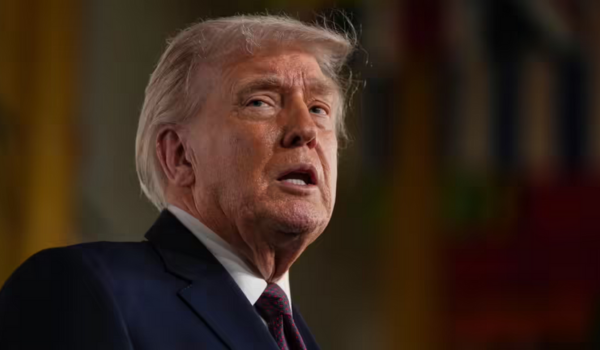
Former U.S. President Donald Trump has said he hopes the United States will not be forced into military action against Iran, signaling a desire to prevent a full-scale conflict even as tensions between the two nations continue to rise. His remarks come at a sensitive moment, with growing geopolitical uncertainty in the Middle East and renewed concerns about regional stability.
Trump emphasized that while the U.S. must remain strong and prepared to defend its interests, war is not the preferred option. He suggested that firmness combined with diplomacy can help prevent escalation, adding that military action should only be considered as a last resort. His comments reflect an effort to project strength while also reassuring global audiences that Washington does not seek unnecessary conflict.
U.S.-Iran relations have long been strained, marked by years of sanctions, diplomatic standoffs, and sporadic confrontations across the region. Under Trump’s presidency, tensions reached some of their highest levels in decades, yet large-scale war was avoided. Trump has often pointed to this period as evidence that tough policies and pressure can deter adversaries without triggering prolonged military engagements.
The renewed focus on Iran comes as instability continues to affect parts of the Middle East, raising fears that localized disputes could escalate into broader regional conflicts. Any military confrontation involving Iran would likely have far-reaching implications, impacting global energy supplies, shipping routes, and international security dynamics.
Trump’s statement appears to acknowledge these risks, reinforcing the idea that conflict with Iran would carry serious consequences not only for the region but also for the global economy. By expressing hope that military action will not be necessary, he aligns with growing public sentiment favoring diplomacy and restraint over military intervention.
Political observers note that Trump’s remarks may also resonate with voters who are wary of foreign wars and prolonged military commitments. His messaging highlights an approach that prioritizes national security while seeking to avoid costly and unpredictable conflicts overseas.
At the same time, Trump made it clear that avoiding war does not mean weakening the U.S. position. He stressed that maintaining a strong defense and clear red lines remains essential to discouraging aggression. This dual approach strength without immediate escalation — has been a recurring theme in his foreign policy rhetoric.
As tensions with Iran remain unresolved, the international community continues to watch closely for signs of dialogue or de-escalation. Whether through negotiations, pressure, or strategic restraint, the path forward will be closely scrutinized by allies and adversaries alike.
For now, Trump’s comments underscore a broader message: despite rising tensions and persistent uncertainty, the United States hopes to avoid war with Iran and pursue outcomes that maintain stability in an already volatile region.
For more details and the fastest updates, follow us on @namma.updates. Stay informed and stay connected.