
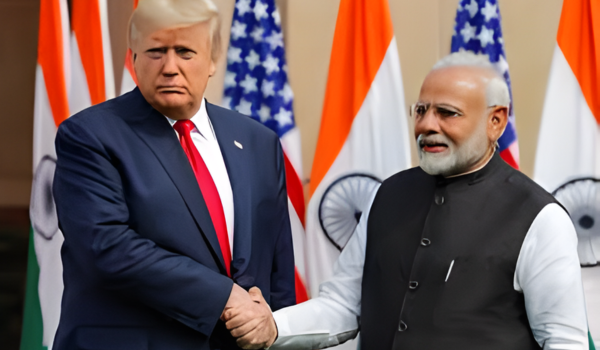
Growing pressure from the United States on key trade and strategic issues is emerging as a major test for the Modi government’s flagship Aatmanirbhar Bharat initiative. As India strengthens its global partnerships, balancing external expectations with its commitment to self-reliance is becoming increasingly challenging.
The Aatmanirbhar Bharat vision, launched to boost domestic manufacturing, reduce import dependency, and position India as a global production hub, has been central to the government’s economic policy. However, recent developments in trade negotiations, defense cooperation, technology transfers, and supply chain partnerships have brought renewed focus on how India navigates its relationship with Washington.
Trade and Strategic Balancing:
The United States remains one of India’s largest trading partners and a key strategic ally. At the same time, Washington has consistently pushed for greater market access, regulatory reforms, and policy adjustments in areas such as digital trade, defense procurement, and manufacturing standards.
Analysts believe this evolving dynamic presents a delicate balancing act. On one hand, India seeks deeper economic engagement with the US to attract investment and strengthen strategic ties. On the other, it remains committed to promoting domestic industries under the Aatmanirbhar Bharat framework.
Self-Reliance vs Global Integration:
The core idea behind Aatmanirbhar Bharat is not isolation but resilient integration building strong domestic capabilities while remaining globally competitive. However, increased external pressure could influence policy decisions related to tariffs, production incentives, and import regulations.
Sectors such as electronics, defense manufacturing, renewable energy, and pharmaceuticals are particularly sensitive, as India aims to scale up local production while managing global trade commitments.
Economic experts suggest that the real test lies in maintaining policy consistency. Any significant deviation from the self-reliance roadmap may raise questions about the government’s long-term industrial strategy. At the same time, excessive rigidity could impact investor confidence and trade relations.
Political and Economic Implications:
Domestically, the Aatmanirbhar Bharat narrative is closely linked to economic nationalism and job creation. The Modi government has positioned self-reliance as a pathway to economic resilience, especially in a world marked by supply chain disruptions and geopolitical uncertainty.
Internationally, India’s approach is being closely watched as it seeks to assert itself as both a reliable global partner and a self-sufficient economy. How New Delhi manages US expectations without compromising its strategic autonomy will likely shape future trade talks and diplomatic engagements.
The Road Ahead:
As India navigates this complex phase, policymakers are expected to prioritize a balanced strategy protecting core domestic interests while sustaining strong international partnerships. The coming months could prove crucial in determining how effectively the government aligns its self-reliance agenda with evolving global realities.
The situation underscores a broader question facing emerging economies: how to strengthen national capabilities without distancing from global cooperation. For the Modi government, managing US pressure while staying true to the spirit of Aatmanirbhar Bharat will be a defining challenge in the next phase of India’s economic journey.
For more details and the fastest updates, follow us on @namma.updates. Stay informed and stay connected.