
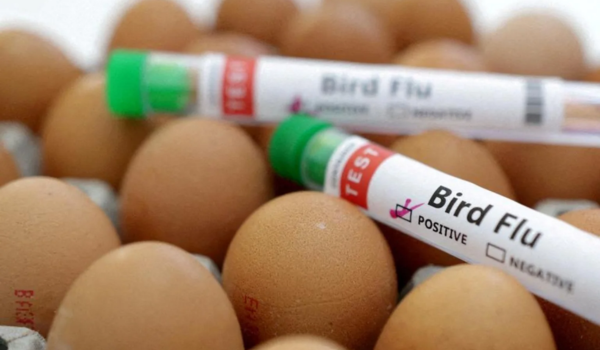
Washington State Reports First Known Human Death from Rare H5N5 Bird Flu Strain
Health officials in Washington State have confirmed what is believed to be the first human death linked to the rare H5N5 strain of bird flu, though they emphasize that the overall risk to the public remains low.
The individual who died was an older adult with underlying health conditions living in Grays Harbor County, roughly 125 kilometers southwest of Seattle. According to a statement released Friday (November 22, 2025) by the Washington State Department of Health, the patient had been receiving treatment after becoming the first known human case of H5N5 infection.
Officials report that the man kept a backyard flock of domestic poultry that had likely been exposed to wild birds, which are a common source of avian influenza transmission.
“The risk to the public remains low,” the department noted, adding that no other individuals connected with the case have tested positive. Health teams are continuing to monitor people who may have had close contact with the patient, but at this time there is no evidence of human-to-human transmission.
Earlier this month, the Centers for Disease Control and Prevention (CDC) stated that current information does not suggest an increased threat to public health as a result of this case.
How H5N5 Differs from H5N1
While the H5N5 subtype is rare in humans, officials say it does not appear to pose a greater risk than the more widely known H5N1 virus, which has led to about 70 human infections in the United States in 2024 and 2025, primarily mild cases among workers on poultry and dairy farms.
Both viruses share the H5 hemagglutinin protein that allows them to enter cells, but they differ in their neuraminidase proteins the component that helps the virus exit infected cells and spread. That distinction is what separates N5 from N1 within avian flu classifications.