
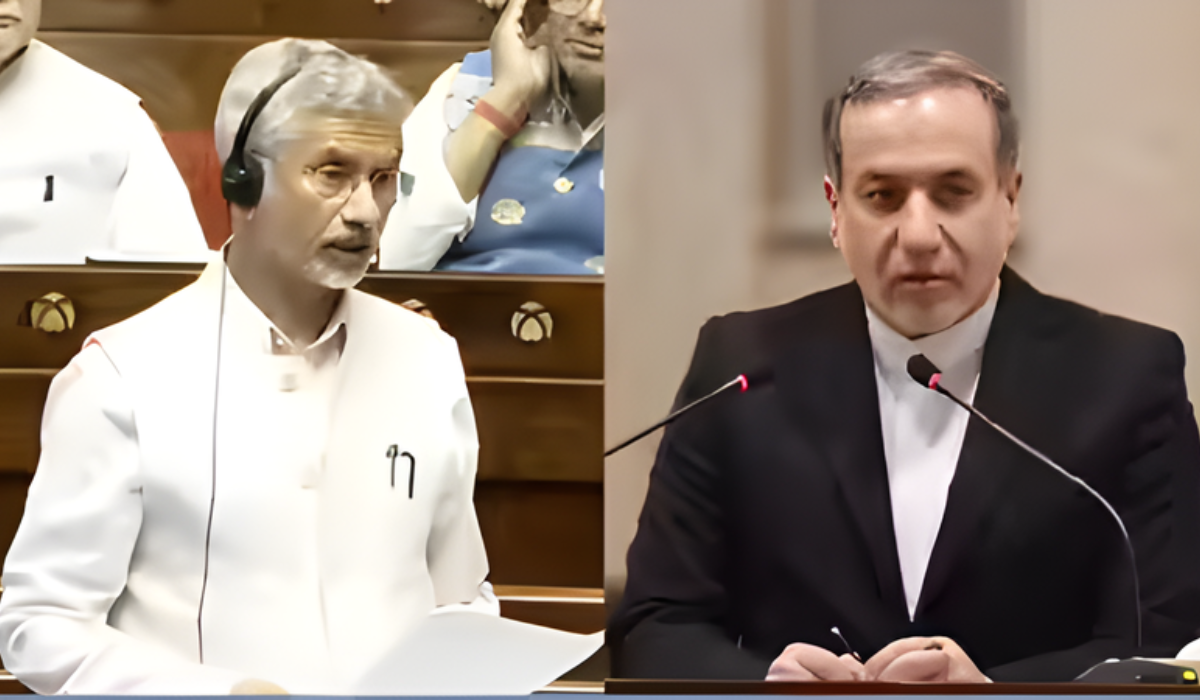
Subrahmanyam Jaishankar held a phone conversation on Tuesday with Seyed Abbas Araghchi to discuss recent regional developments and concerns about shipping security in the region.
In a post on X, Jaishankar later described the exchange as a detailed discussion and said both sides agreed to stay in contact.
“A detailed conversation this evening with Foreign Minister Abbas Araghchi of Iran on the latest developments regarding the ongoing conflict. We agreed to remain in touch,” he wrote.
Later on Wednesday, Iran’s foreign ministry released a statement providing details of the phone conversation between Subrahmanyam Jaishankar and Seyed Abbas Araghchi.
In a post on X, the Ministry of Foreign Affairs of Iran said that the two ministers discussed the latest regional developments during their call.
According to the statement, they also reviewed the impact of the ongoing conflict on maritime traffic through the Strait of Hormuz, a crucial route for global shipping.
“The foreign ministers of Iran and India also discussed the consequences of the US and Israeli regime’s military aggression on the security of shipping and vessel traffic through the Strait of Hormuz,” the Iranian foreign ministry said.
During the call, Araghchi detailed the attack by the United States and Israel on Iran over the past 11 days, including the missile attack on a girls’ elementary school, which killed over 100 girls, and civilian sites and public service centers.
“In this telephone conversation, Iran’s Foreign Minister detailed the crimes committed by the United States and the Israeli regime against the Iranian nation over the past 11 days, including the missile attack on a girls’ elementary school in Minab on the first day of the war and subsequent widespread attacks on civilian sites and public service centers. He emphasized Iran’s determination to comprehensively defend the integrity of Iran,” the post added.
He said such actions violated international law and the principles of the United Nations Charter.
The Iranian minister also referred to what he called Iran’s “principled approach to safeguarding shipping security in the Persian Gulf,” adding that instability affecting maritime traffic in the region was the result of “aggressive and destabilizing actions of the United States.”
Jaishankar, according to the statement, emphasised the importance of continuing and strengthening bilateral relations between India and Iran, and stressed the need for continued consultations aimed at restoring stability in the region.