
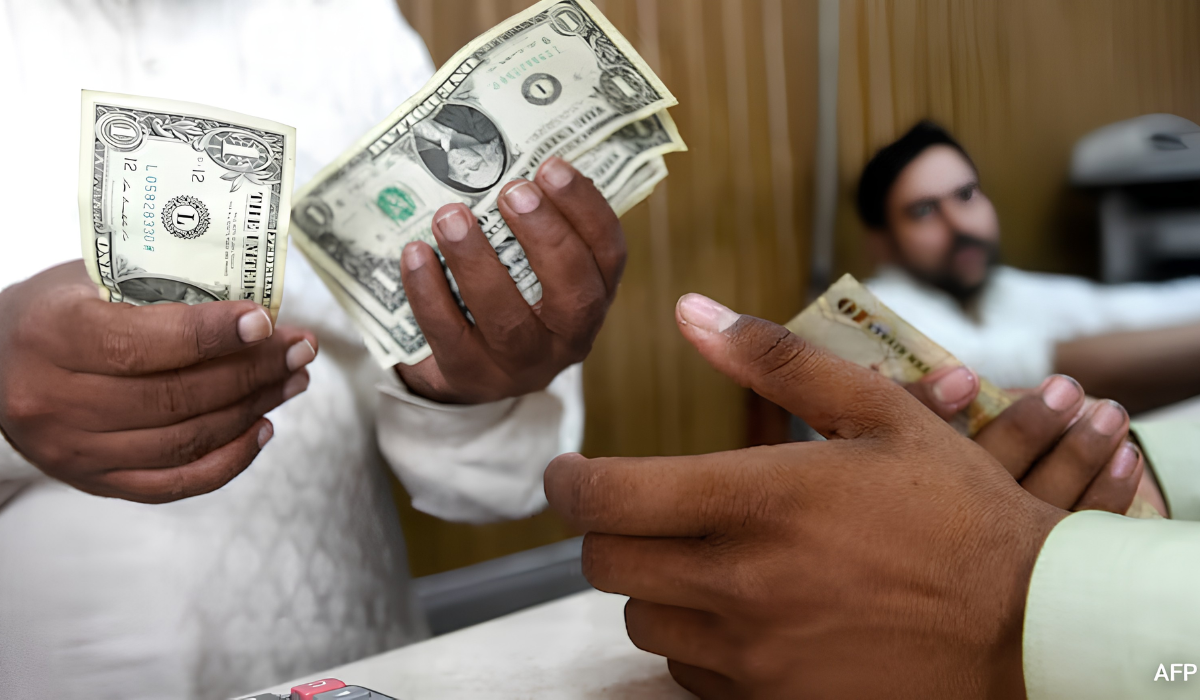
Cash-strapped Pakistan has reportedly approached the United States for a $10 billion financial support package to help stabilize its struggling economy. According to a Reuters report, Islamabad has requested a $10 billion Bilateral Exchange Stabilisation Support Facility from US Treasury Secretary Scott Bessent, with a repayment period of up to five years.
The request comes as Pakistan continues to recover from its worst economic crisis in decades, despite being under an ongoing International Monetary Fund (IMF) bailout programme. It also follows Islamabad’s diplomatic efforts during the US-Iran conflict, where it played a mediating role, raising expectations that it could leverage its increased diplomatic engagement to secure economic assistance from Washington and other international partners.
If approved, the proposed facility would provide a significant boost to Pakistan’s economy by strengthening its foreign exchange reserves, easing pressure on the Pakistani rupee, and reducing dependence on multilateral lenders. The support would complement the country’s ongoing fiscal and monetary reforms being implemented under the IMF programme, Reuters reported.
So far, neither the Pakistani government nor the United States has officially commented on the reported request.
Pakistan’s Finance Minister Muhammad Aurangzeb, however, confirmed that he discussed the country’s economic vulnerability to regional geopolitical tensions during his recent meeting with US Treasury Secretary Scott Bessent.
“Senator Aurangzeb called for stronger US support to help Pakistan improve its access to international capital markets, boost foreign exchange reserves, and enhance its sovereign credit ratings,” Pakistan’s Foreign Ministry said in a statement.
The ministry added that both sides reaffirmed their commitment to strengthening bilateral economic cooperation, encouraging greater US investment in Pakistan, and advancing key strategic projects.
Pakistan’s Economy Under Pressure
Pakistan remains under a $7 billion International Monetary Fund (IMF) programme, which requires the government to implement politically challenging fiscal reforms, including tax hikes, tighter public spending, and structural economic changes. The country narrowly avoided a sovereign default in 2023 after securing a $3 billion IMF Stand-By Arrangement.
It later received a $7 billion Extended Fund Facility (EFF), along with an additional $1.3 billion loan to strengthen its resilience against climate change and natural disasters.
Despite these financial packages, Pakistan continues to rely heavily on IMF disbursements, bilateral assistance, and loan rollovers from key partners such as China and Saudi Arabia to maintain its external reserves. According to Reuters, this dependence leaves the country vulnerable to delays in securing external financing.
In January, Pakistan’s central bank projected that the country’s foreign exchange reserves could recover to nearly $20 billion by the end of 2026, approaching the record levels seen in 2021.
What Is an Exchange Stabilisation Facility?
Exchange stabilisation facilities are relatively rare financial support arrangements offered by the US Treasury through the Exchange Stabilisation Fund (ESF). Their primary purpose is to help countries strengthen their foreign exchange reserves and stabilise their currencies by providing dollar funding, currency swap arrangements, or financial guarantees, according to Reuters.
These facilities are different from the US Federal Reserve’s permanent dollar swap lines, which are available only to a select group of major central banks.
Before Argentina received an exchange stabilisation package in 2025, the most recent major arrangement of this kind was extended to Uruguay in 2002. Mexico, meanwhile, has maintained a long-standing currency swap agreement with the United States dating back to the 1940s.