
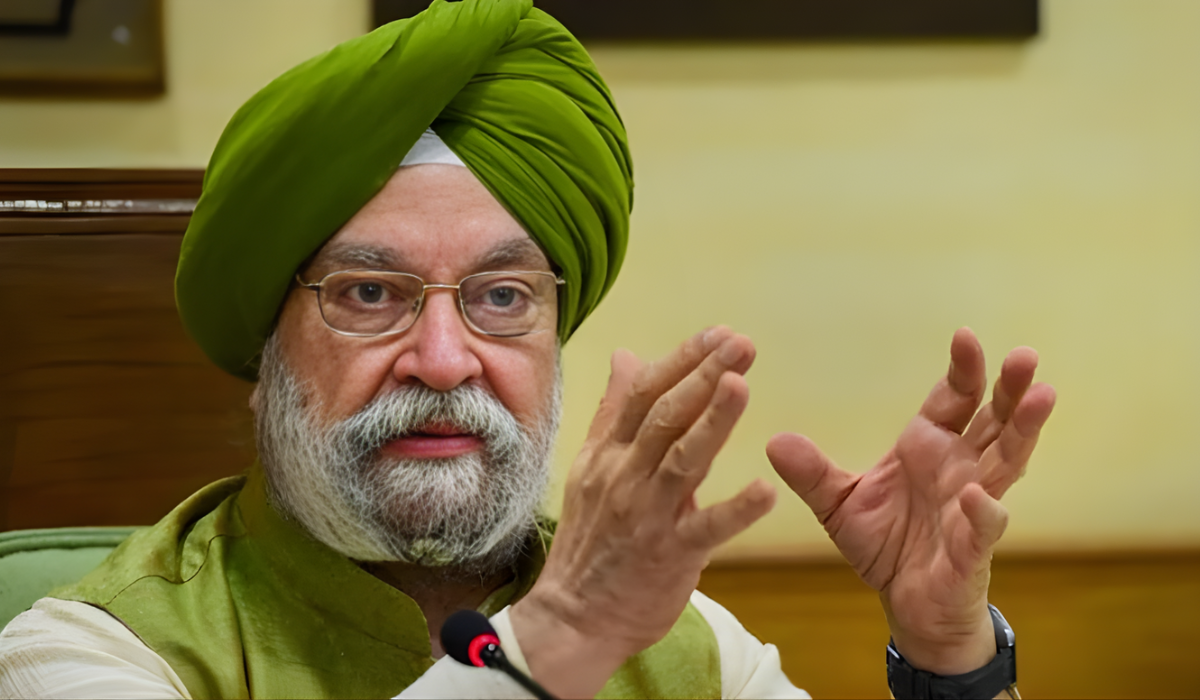
Hardeep Singh Puri said India has remained largely insulated from the global energy crisis triggered by the ongoing West Asia conflict, emphasising that fuel supply and prices in the country have stayed stable even as many nations face shortages and disruptions.
In a post on social media, Puri noted that while several countries have adopted strict fuel conservation measures—such as odd-even schemes, four-day work weeks, closures of schools and offices, and fuel price hikes of 20–30%—India continues to be an “oasis of energy security, availability and affordability.”
His remarks come amid rising geopolitical tensions that have unsettled global energy markets, forcing many countries to take emergency steps to manage fuel demand and supply.
India Preserves Supply Stability as Global Pressure Grows
While multiple nations grapple with fuel shortages and consumption cuts, India has ensured steady fuel availability across sectors. The government’s strategy has focused on maintaining supply chains and shielding consumers from sharp price increases.
Puri’s statement highlights India’s relative stability compared to volatile global markets, where the West Asia conflict has disrupted oil and gas supplies.
Govt Increases LPG Supply to Support Industries
To further ease supply pressures, the government has increased the allocation of commercial LPG to states up to 70% of pre-crisis levels. Puri said that an additional 20% allocation has been earmarked for industries such as steel, automobiles, textiles, and other labour-intensive sectors.
He added that priority will be given to industries where piped natural gas cannot serve as a substitute.
According to an official communication from the Ministry of Petroleum and Natural Gas, the revised allocation builds on the earlier 40% supply provided to states, along with an additional 10% linked to reforms such as promoting piped natural gas. With the latest increase, total allocation now stands at 70%, aimed at supporting industrial demand and ensuring uninterrupted operations.
The enhanced supply will benefit key sectors including steel, automobile, textile, dye, chemicals, and plastics – industries that are labour-intensive and critical to economic activity. Priority will also be given to sectors that rely on LPG for specialised heating processes where natural gas cannot replace it.
Conditions and Implementation
To access the additional allocation, entities must comply with existing conditions, including registration with oil marketing companies and applying for piped natural gas connections under city gas networks. However, certain requirements may be relaxed for industries where LPG is indispensable.
States have also been encouraged to utilize the remaining 10% reform-based allocation if they have not already done so.
The move comes as the government seeks to prevent disruptions to industrial activity amid global energy uncertainties. By increasing LPG allocation and prioritizing key sectors, the aim is to ease pressure on businesses and maintain production continuity.
As the global energy landscape remains uncertain, India’s focus continues to be on ensuring supply stability, managing demand, and protecting both consumers and industries from external shocks.