
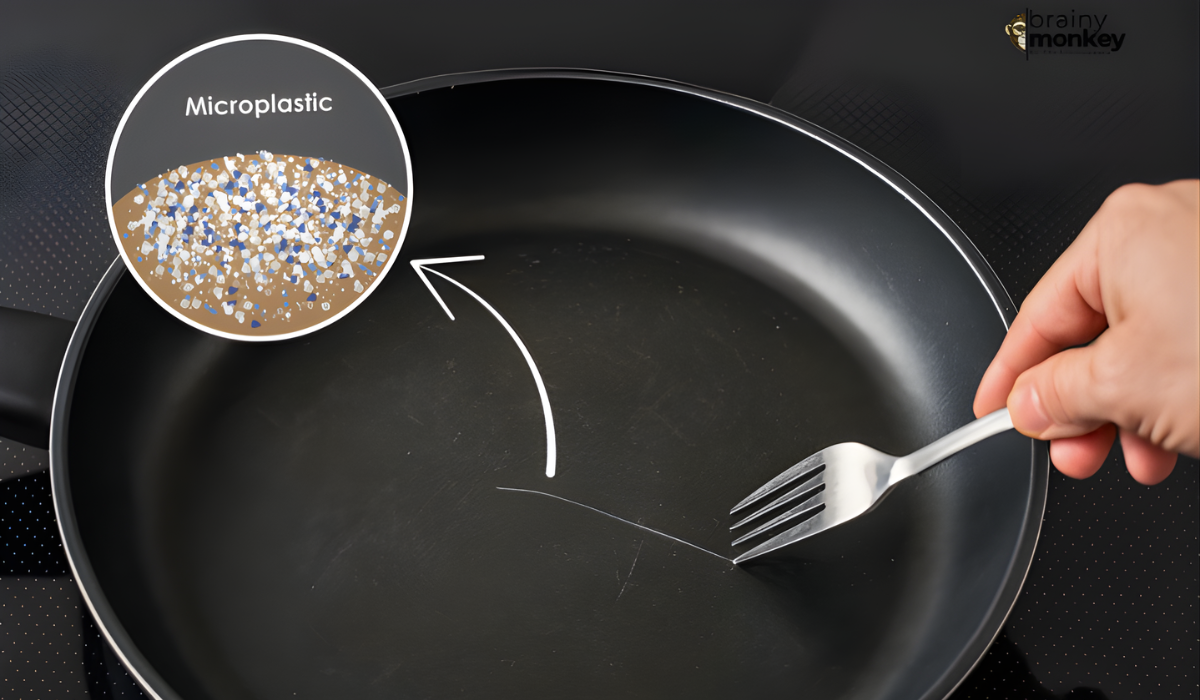
A recent kitchen study highlights concerns about what damaged non-stick pans may release into food. Experts warn that small everyday kitchen habits can have long-term health effects, as even a scratched pan may expose you to microplastics.
Rising concerns about kitchen safety have emerged following a study suggesting that scratched non-stick pans may release thousands – even millions – of microplastic particles into food.
The issue drew attention after Dr. Sangita Reddy highlighted the risks in a recent post, encouraging people to reconsider everyday cooking habits.
“You would never intentionally serve plastic to your family. Yet a simple scratch on a non-stick pan could be doing just that,” she noted, emphasizing how routine kitchen practices may unknowingly pose health risks.
Her comments echo a wider scientific concern that microplastics and related chemicals are no longer just environmental issues – they have become part of everyday life.
What is the concern about?
The study suggests that when non-stick cookware is scratched, its coating may release tiny plastic particles into food. These particles are not visible to the naked eye but can enter the body through regular consumption.
When the coating is heavily damaged, the number of particles released may be significantly higher, increasing concerns about long-term exposure.
The PFAS factor
A major concern is the presence of PFAS (per- and polyfluoroalkyl substances), commonly used in non-stick coatings. Known as “forever chemicals,” they do not easily break down in the environment or the human body.
Dr. Sangita Reddy pointed out that these substances have increasingly been linked to serious health issues, including cancer, hormonal imbalances, infertility, and immune disorders.
What makes this even more concerning is that studies have already detected PFAS in the bloodstream of a large portion of the global population, suggesting widespread exposure.
A problem closer to home
“This isn’t a distant environmental issue – it’s right in our kitchens, part of our everyday lives,” emphasized Dr. Sangita Reddy in her post.
Experts note that while non-stick cookware is generally safe when its surface remains intact, the potential risks may rise once it becomes scratched or begins to peel.
What should you do?
Health experts, including Dr. Sangita Reddy, recommend a few simple steps to minimise potential risks:
- Avoid using heavily scratched or damaged non-stick pans
- Choose wooden or silicone utensils instead of metal
- Cook on low to medium heat
- Replace cookware once the coating begins to wear off
She also advises considering alternatives such as stainless steel or cast iron, which do not depend on chemical coatings.
Dr. Sangita Reddy’s message extends beyond cookware, pointing to a broader shift toward preventive health.
“This isn’t about fear – it’s about awareness,” she wrote, emphasizing that health is shaped not only in hospitals but also through the everyday choices we make at home.
The conversation around microplastics is evolving quickly, with the kitchen now part of the discussion. While more research is needed to fully understand long-term effects, the takeaway is clear: small changes in daily habits can make a meaningful difference.
As she puts it, the real question isn’t whether it affects us – but what we choose to change.