
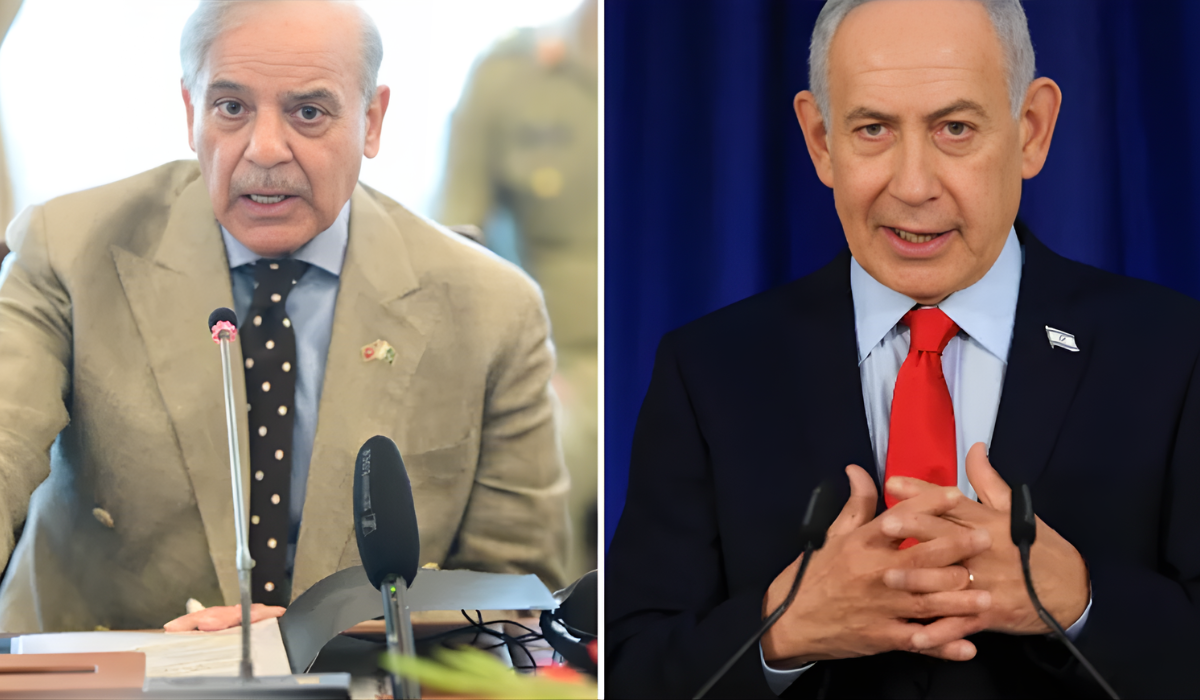
Benjamin Netanyahu’s remarks came just hours after Pakistan’s Prime Minister Shehbaz Sharif claimed that the US-Iran ceasefire would apply “across all regions,” including Lebanon.
Prime Minister Benjamin Netanyahu stated that Israel backed US President Donald Trump’s decision to pause strikes on Iran for two weeks, but clarified that the ceasefire does not extend to Lebanon. This contradicts an earlier claim by Pakistan’s Prime Minister Shehbaz Sharif, who has been mediating in the Middle East conflict.
In a statement released on Wednesday, Netanyahu’s office said, “Israel also supports the US effort to ensure that Iran no longer poses a nuclear, missile, and terror threat to America, Israel, Iran’s Arab neighbors, and the wider world.”
The statement further noted that the United States has assured Israel of its commitment to achieving these shared objectives through upcoming negotiations involving the US, Israel, and regional allies.
“The two-week ceasefire does not cover Lebanon,” the statement said.
The remark came hours after Pakistan’s Prime Minister Shehbaz Sharif asserted that the ceasefire agreed upon by the US, Iran, and their allies applied “everywhere,” including Lebanon.
Lebanon, already grappling with severe economic and political challenges, was drawn into the Middle East conflict on March 2 when Hezbollah launched rockets at Israeli cities, saying it was in retaliation for the killing of Iran’s Supreme Leader Ali Khamenei.
Israel carried out extensive airstrikes across Lebanon, which resulted in over 1,500 deaths and displaced more than one million people—over a fifth of the country’s population.
US and Iran Reach Ceasefire Agreement
The United States and Iran agreed to a two-week ceasefire on Tuesday, roughly an hour before the deadline set by US President Donald Trump to “obliterate” Iran was due to expire.
The last-minute deal followed conversations between Trump, Pakistan’s Prime Minister Shehbaz Sharif, and Pakistani Army Chief Asim Munir, who had urged both sides to pursue a truce.
Sharif stated that Islamabad would host delegations from both nations on April 10 for talks aimed at reaching a “conclusive agreement.”
Tehran also confirmed its willingness to engage in negotiations with Washington in Pakistan, seeking a pathway to end the conflict that began on February 28 after joint US-Israel strikes on Iran.
Iran Sets 10 Conditions for Ceasefire
Iran said on Wednesday that its 10-point plan to end the conflict with the United States would require Washington to recognize its uranium enrichment program and lift all sanctions.
Tehran added that the proposal also calls for Iranian control over the Strait of Hormuz, a withdrawal of US forces from the Middle East, a halt to attacks on Iran and its allies, the release of frozen Iranian assets, and a binding resolution from the UN Security Council.
US President Donald Trump confirmed that he had received the proposal and said he believed it could serve as a “workable basis” for negotiations.