
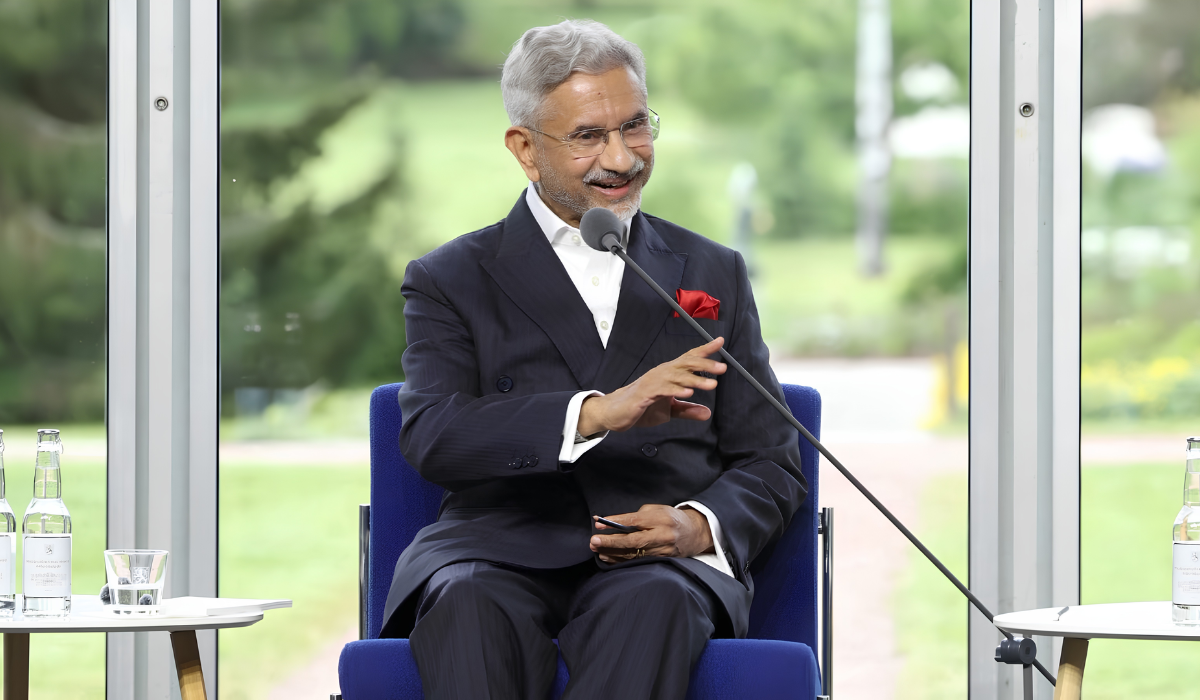
External Affairs Minister S. Jaishankar on Thursday criticised what he called the United States’ shifting stance on India’s purchase of Russian oil. He pointed out that Washington had earlier encouraged New Delhi to import Russian crude to help stabilise global energy markets, but later imposed tariffs linked to the same issue.
Speaking at the “Emerging Powers and the New Geopolitical Competition” session during the Kultaranta Talks in Finland, Jaishankar said, “Let’s not pretend there is some grand principle at play. If it’s on one day and off the next, then it appears the US chooses to act when it suits its interests and refrain when it doesn’t.”
His remarks came in response to a question about India’s position on the Russia-Ukraine conflict, after a journalist suggested that India had been overly sympathetic towards Russia and too willing to continue purchasing Russian oil.
Defending India’s energy policy, Jaishankar said New Delhi’s decisions were guided by practical considerations and national interest. He explained that India purchased oil based on affordability and availability, noting that a significant share of the global supply at the time came from Russia. He added that European countries had increased their imports from the Middle East—India’s traditional source of crude—leaving New Delhi with limited options and influencing its shift towards Russian oil.
“I’ll make two observations. I buy oil based on cost and availability. At that time, much of the oil available in the market was Russian because Europeans were sourcing large volumes from the Middle East, which has traditionally been our supplier. The circumstances naturally led us in that direction,” he said.
Jaishankar noted that in 2022, the United States acknowledged India’s important role in supporting global economic stability. He said Washington had encouraged New Delhi to continue purchasing Russian oil to help keep energy markets balanced and avoid a surge in global inflation after Western nations imposed sanctions on Moscow.
“At that time, the United States had directly urged India to purchase Russian oil to help stabilise global energy markets,” Jaishankar said during his address in Finland, reiterating that India’s energy imports are determined by cost and availability.
The External Affairs Minister also highlighted what he described as inconsistencies in Western sanctions policies, arguing against viewing complex issues of global trade and energy security through a selective or one-sided moral framework.
Europe’s selective standards
During the same session, Jaishankar remarked that no European nation has ever been targeted with Indian-made weapons, responding to a question about Europe’s historical actions and perceived inconsistencies in its approach to global security issues.
“I wish the same could be said about European weapons in relation to India,” Jaishankar remarked, highlighting India’s record of not posing a security threat to Europe.
Expanding on the point, the External Affairs Minister reiterated India’s long-standing concerns regarding Western arms supplies in the region.
“European countries have supplied weapons that have been used against India, and this has been happening for decades. India, on the other hand, has never acted in a way that threatened Europe’s security. I believe that is a fair observation,” he said.
Jaishankar’s comments formed part of a broader defense of India’s sovereign policy decisions. During his engagements across Europe, he has consistently challenged what New Delhi views as inconsistencies in Western approaches to global security, energy policy, and strategic autonomy.