
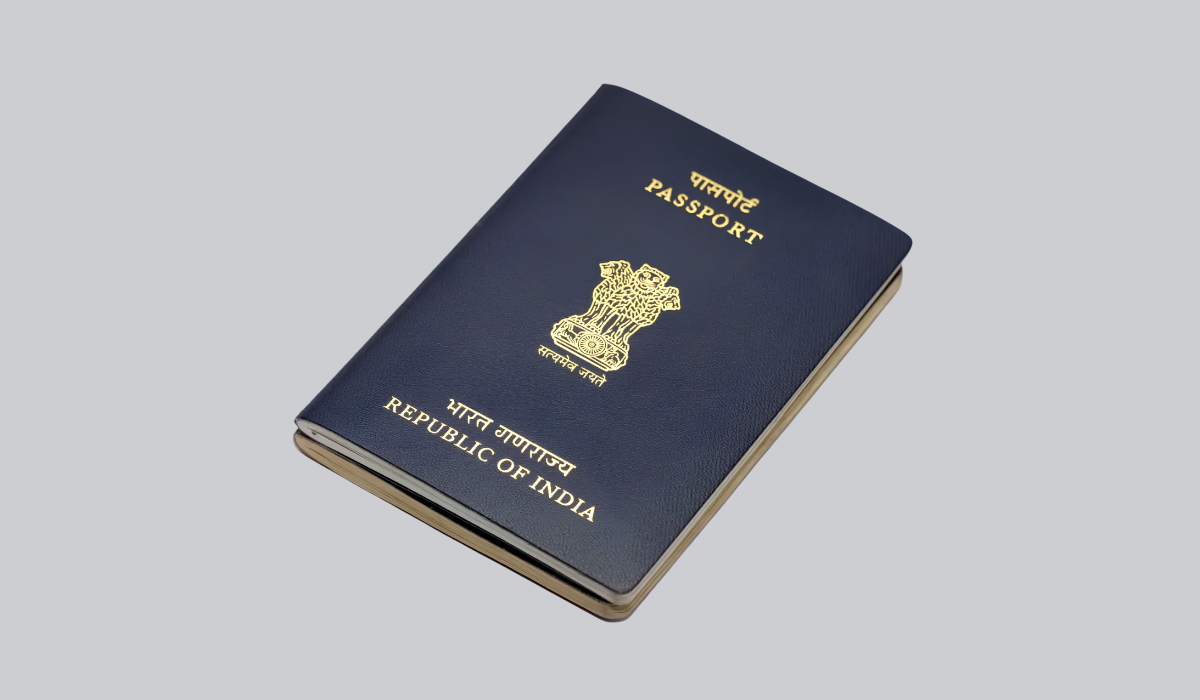
A senior official from the Ministry of External Affairs (MEA) on Wednesday (June 24, 2026) clarified that an Indian passport is a travel document and should not be considered proof of citizenship. According to the official, the passport’s primary purpose is to facilitate the international travel of Indian nationals by enabling transit through foreign countries and ports. It is not intended to serve as a document establishing citizenship and should not be equated with records specifically meant to verify citizenship status.
Emphasising the role of passports in enabling Indian professionals to access global job markets, MEA officials said the government will step up mobility partnerships with Western countries and Japan in the coming months. The initiative aims to create more secure and legal employment opportunities for Indian citizens in these advanced economies.
Passport Serves as a Travel Document
Responding to a question from The Hindu on whether an Indian passport could be used to challenge exclusion from voter lists during the ongoing Special Intensive Revision (SIR) of electoral rolls in 16 states, a senior MEA official said that a passport is a travel document and not proof of citizenship.
The official explained that while a passport certifies an individual’s nationality for international travel, it is not a legal document establishing citizenship. Another senior MEA official added that Indian passports are issued only after extensive verification, with authorities relying on multiple government records, including Aadhaar and PAN, to confirm an applicant’s eligibility before issuing the document.
Secure and Ethical Migration
The official also announced that the Ministry of External Affairs will host the Human Resource Mobility Forum in New Delhi from June 30 to July 1, bringing together representatives from countries including Italy, Germany, Japan, Russia, and Denmark to strengthen international mobility partnerships.
The event is expected to attract a large number of recruitment agencies from across India and will focus on promoting safe and ethical migration. It will also raise awareness about fraudulent agents who use illegal channels to send Indians to conflict zones and other high-risk destinations. “We have to dispel the myth that people can reach countries like Italy or Greece through illegal means and earn large sums of money,” the official said.
Speaking during the 14th Passport Seva Divas celebrations on June 24, the official added that Indian passport holders currently enjoy visa-free access to 27 countries, while 47 countries offer visas on arrival and 66 countries provide electronic visas (e-visas).
Expanding Passport Network
An MEA official said that nearly 10% of Indian passport holders now use chip-enabled e-passports. The ministry has established 545 Passport Seva Kendras (PSKs) across the country, extending passport services to almost every Lok Sabha constituency to meet the growing demand.
The official also said that one-stop support centres for distressed Indian women have been set up in Gulf countries and Singapore with assistance from the Indian community. Similar centres are expected to be launched in more countries to provide support to Indian women facing domestic violence and other forms of distress abroad.
Marking Passport Seva Divas, External Affairs Minister S. Jaishankar reaffirmed the ministry’s commitment to making passport services faster, more transparent, and more accessible. He said the expansion of Passport Seva Kendras and the rollout of chip-enabled e-passports have made international travel easier while helping Indians access employment opportunities overseas.