
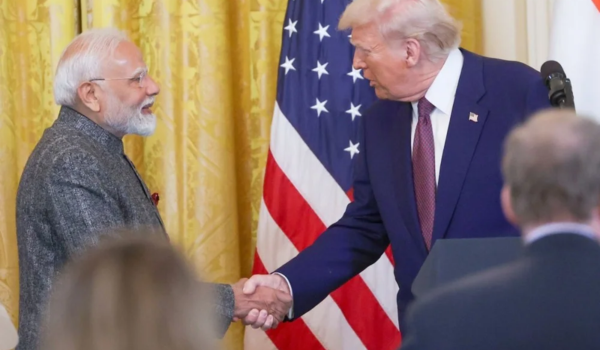
Former US President Donald Trump has claimed that Prime Minister Narendra Modi is eager to maintain favourable relations with Washington, alleging that India reduced its imports of Russian oil to avoid higher trade tariffs imposed by the United States. Trump made the statement while supporting a US senator’s claim that New Delhi adjusted its energy strategy in response to American economic pressure.
Speaking about trade relations with India, Trump suggested that tariff threats played a key role in influencing India’s decisions. He portrayed the alleged reduction in Russian oil purchases as part of a broader effort by the Indian government to protect its export-driven sectors from stricter US trade measures. According to Trump, the move reflected New Delhi’s desire to keep economic ties with Washington stable and predictable.
The remarks come at a time when India’s energy policy has been under close international scrutiny. Since the onset of the Russia-Ukraine conflict, India has increased purchases of discounted Russian crude, arguing that affordable energy is essential for sustaining economic growth and protecting consumers from global price shocks. Indian officials have repeatedly maintained that these decisions are based on national interest and market dynamics.
Trump’s comments, however, suggest a different narrative, linking energy imports directly to tariff negotiations. By backing a senator’s claim, Trump framed the issue as an example of what he described as effective trade pressure, arguing that firm tariff policies can influence the economic behaviour of even close partners.
The statement has triggered debate among policy experts and political observers. Some see Trump’s remarks as part of his broader campaign messaging on trade and foreign policy, highlighting his preference for aggressive economic tactics. Others caution that energy import patterns are shaped by multiple factors, including pricing, logistics, and long-term supply agreements, rather than political pressure alone.
So far, the Indian government has not responded publicly to Trump’s claims. In previous statements, New Delhi has emphasized its strategic autonomy in foreign policy decisions and stressed that trade and energy choices are made independently, keeping domestic priorities at the forefront.
As global energy markets remain volatile and geopolitical tensions persist, India’s oil procurement strategy continues to attract international attention. Trump’s remarks add a new political dimension to the discussion, linking trade tariffs, diplomatic relations, and energy security in an increasingly complex global landscape.
For more details and the fastest updates, follow us on @namma.updates. Stay informed and stay connected.