
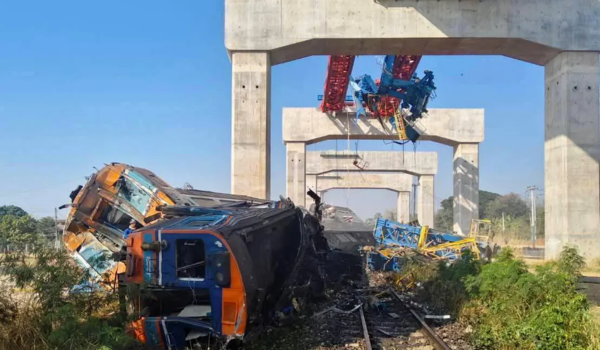
A tragic accident unfolded in northeast Thailand when a large construction crane collapsed onto a moving passenger train, killing at least 22 people and leaving dozens injured. The incident occurred in Nakhon Ratchasima province, sending shockwaves across the country and raising serious concerns about construction and railway safety.
According to officials, the train was traveling from Bangkok to Ubon Ratchathani with nearly 200 passengers on board when it passed beneath an active railway construction site. At that moment, a massive crane used for elevated rail work suddenly toppled onto the tracks, crashing into multiple coaches. The impact caused several carriages to derail, trapping passengers inside and triggering scenes of panic and chaos.
Emergency services rushed to the location within minutes of the crash. Rescue teams worked tirelessly to pull survivors from damaged train cars, using heavy equipment to cut through twisted metal. Injured passengers were rushed to nearby hospitals, with several reported to be in critical condition. Authorities confirmed that the death toll may rise as rescue operations and medical assessments continue.
Eyewitnesses described hearing a loud crash followed by screams as the train jolted violently. Smoke could be seen rising from the wreckage, while stunned passengers attempted to escape through broken windows and damaged doors. Many survivors were treated at the scene for burns, fractures, and shock.
The crane involved in the accident was part of an ongoing high-speed rail infrastructure project aimed at improving regional connectivity. Preliminary assessments suggest a possible mechanical failure or structural instability, though officials have not ruled out human error. A full-scale investigation has been launched to determine the exact cause of the collapse and to identify any lapses in safety protocols.
Government leaders expressed deep condolences to the families of the victims and assured that those responsible would be held accountable. Compensation and support measures for the affected families have also been announced. Rail services in the area were temporarily suspended as authorities worked to clear debris and assess damage to the tracks.
This devastating incident ranks among the deadliest railway-related accidents in Thailand in recent years. It has renewed public scrutiny over construction safety standards, especially at sites operating near active transport routes. As the nation mourns the loss of lives, questions continue to grow over how such a tragedy could occur and what steps will be taken to prevent similar disasters in the future.
For more details and the fastest updates, follow us on @namma.updates. Stay informed and stay connected.