
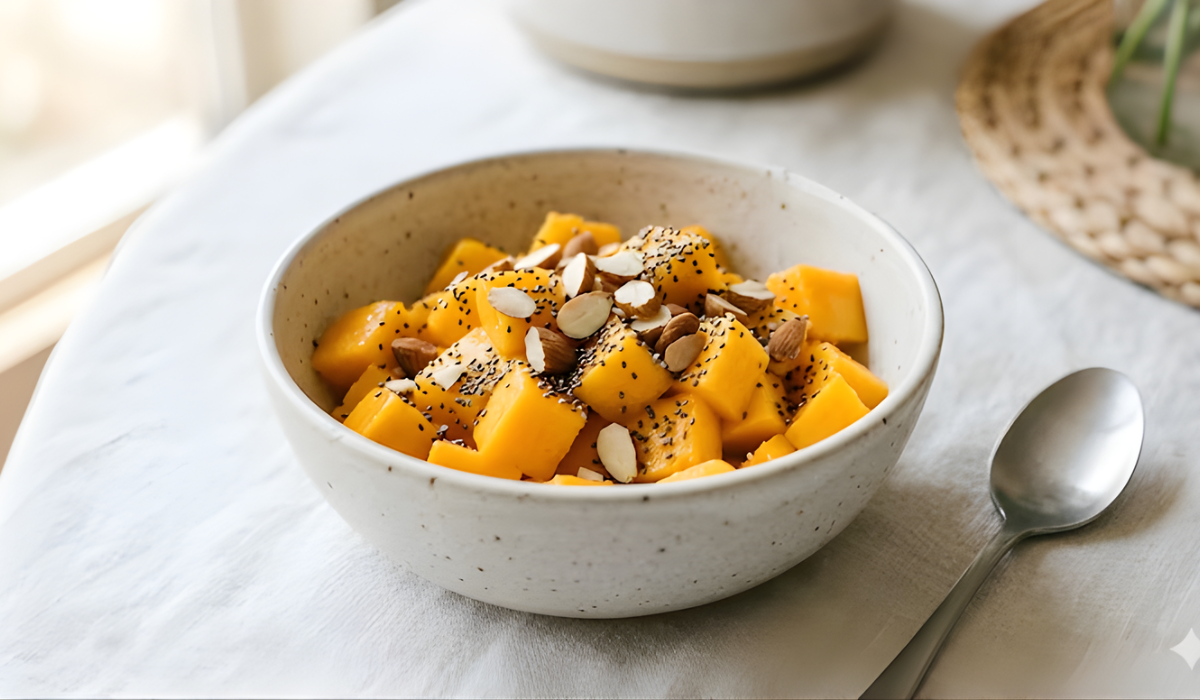
Can mango be included in a diabetic diet? Experts say yes – if consumed mindfully. With proper portion control and smart food pairings, it’s possible to enjoy mango without triggering sharp spikes in blood sugar levels.
Mango season is hard to resist, but for those with diabetes, the same concern comes up: is it safe to eat? The answer isn’t a simple yes or no – it depends on maintaining balance, controlling portions, and making smart dietary choices.
Should people with diabetes eat mangoes?
Mango has a moderate glycaemic index (GI) of about 50–55, which means it causes a gradual rise in blood sugar when consumed in appropriate portions. It isn’t completely restricted, but it should be eaten in moderation.
The science behind mangoes
Mangoes contain mangiferin, a bioactive compound that has been studied for its potential to improve insulin sensitivity and reduce inflammation. So despite their natural sweetness, they can offer functional health benefits when eaten mindfully.
Portion size makes all the difference
For most people with diabetes, a safe serving is about 80–100 grams (roughly ½ cup of chopped mango), providing around 12–15 grams of carbohydrates. Keeping portions within this range can help manage blood sugar spikes effectively.
Timing can significantly impact your blood sugar levels
Avoid eating mango on an empty stomach, as it can cause a rapid spike in blood sugar. Instead, have it after a balanced meal or combine it with protein or healthy fats.
Ways to enjoy mango without blood sugar spikes
- Combine it with nuts or seeds
- Stick to small portions
- Eat it whole instead of drinking it as juice
What to avoid when eating mango
Avoid mango shakes, desserts, and packaged juices, as well as combining mango with refined carbohydrates. Even though it’s a healthy fruit, overeating can still lead to blood sugar spikes.
“Diabetes doesn’t mean cutting out mangoes completely – it’s about including them wisely,” says Palak Nagpal, a clinical nutritionist. “Portion control is key, and pairing mango with protein or healthy fats can help reduce sudden glucose spikes.”
She further explains, “Having mango after a meal instead of on an empty stomach slows down sugar absorption and helps maintain more stable blood glucose levels.”
Emphasising moderation, she adds, “A small serving of mango can easily fit into a diabetic diet if consumed mindfully. The issue is usually not the fruit itself, but the quantity and how it’s eaten.”
In short, having diabetes doesn’t mean giving up mangoes entirely. With controlled portions, proper timing, and smart food combinations, you can still enjoy this seasonal favourite while keeping your blood sugar in check.