
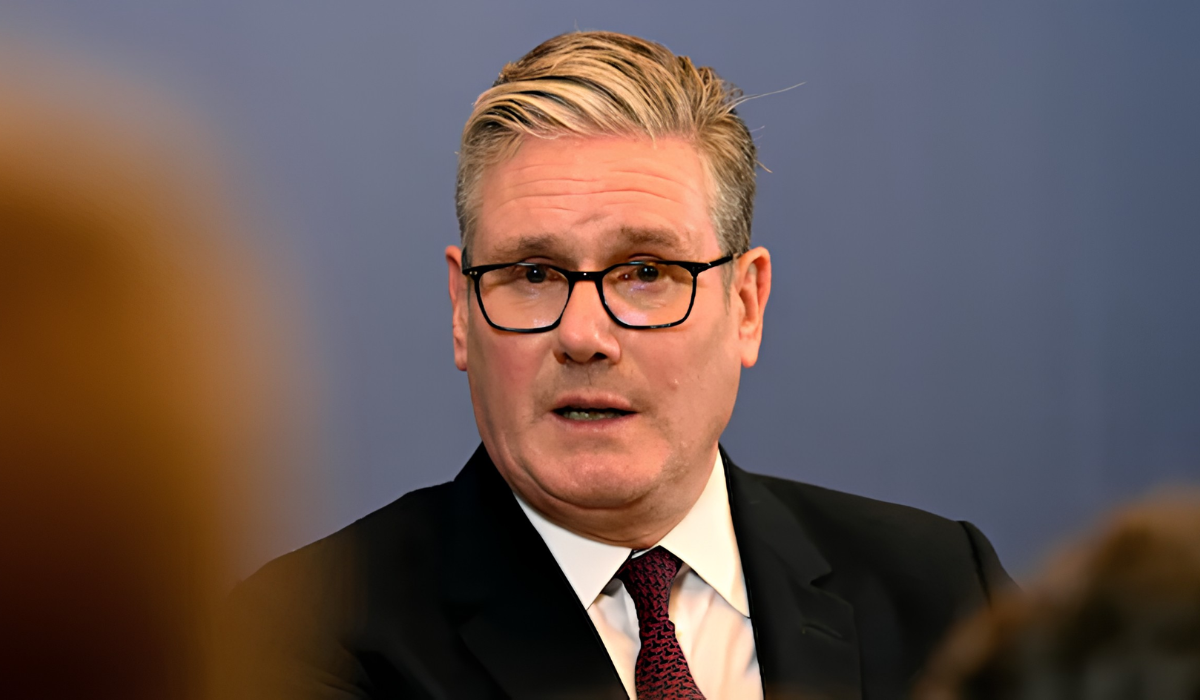
British Prime Minister Keir Starmer was expected to make a statement on Monday amid growing speculation that he could announce a timetable for stepping down. Although his office did not confirm the reports, preparations for a major announcement were evident outside 10 Downing Street, where a lectern had been set up and journalists had gathered since morning.
If Starmer confirms a resignation timetable, he would become the sixth British prime minister in the past decade to announce an early departure outside Downing Street. The expected announcement comes just a day before Britain marks the 10th anniversary of the vote to leave the European Union, a decision that continues to have a lasting impact on the country’s politics and economy.
Starmer spent the weekend weighing his future after intraparty rival Andy Burnham secured victory in a parliamentary by-election. Burnham, who served as the Labour mayor of Greater Manchester until last week, campaigned with the intention of challenging Starmer for the leadership of both the Labour Party and the government. He is set to be sworn in as a Member of Parliament on Monday.
While Starmer’s office declined to comment on reports of his possible resignation, Business Secretary Peter Kyle said on Sunday that the prime minister was “taking time to reflect on the political realities, challenges and opportunities” facing him.
It remains uncertain whether Andy Burnham would succeed Starmer unopposed or face a leadership contest if the prime minister steps down. Wes Streeting, who resigned as health secretary last month in protest over Starmer’s leadership, has already announced that he will enter the race if a leadership election is held.
Discontent within the Labour Party has been growing for months as lawmakers seek to reverse the government’s declining popularity following its landslide election victory in July 2024. Starmer has faced criticism for struggling to deliver the economic growth he promised, improve overstretched public services, and ease the cost-of-living crisis.
His leadership has also come under scrutiny over a series of political controversies, including his decision to appoint Peter Mandelson as the UK’s ambassador to the United States, a move that drew criticism from some political opponents and commentators.
Labour is facing pressure from both ends of the political spectrum, with some liberal voters shifting their support to the Green Party while Nigel Farage’s anti-immigration Reform UK continues to gain momentum in nationwide opinion polls.
Even before any official announcement from Starmer, US President Donald Trump commented on the speculation, writing on social media: “Keir Starmer will resign as Prime Minister of the United Kingdom. He failed badly on two very important subjects – IMMIGRATION AND ENERGY (OPEN NORTH SEA OIL!). I wish him well! President DJT.”
It was unclear whether Trump was responding to media reports about Starmer’s future, and the two leaders did not speak over the weekend.
Starmer’s relationship with US President Donald Trump, initially viewed as cordial, has become increasingly strained in recent months over several foreign policy issues, including the Iran conflict, which Britain chose not to join militarily.
Despite mounting political pressure at home, Starmer has received international recognition for his diplomatic efforts, particularly in rallying European support for Ukraine in its war against Russia and working to reduce the economic and political repercussions of the Iran conflict.
Some Labour lawmakers have rallied behind him. London MP Neil Coyle defended Starmer in a post on X, criticizing what he described as a politically driven campaign against the prime minister. He argued that replacing the party leader would not immediately resolve major international challenges involving Trump, Iran, Ukraine, Russian President Vladimir Putin, Elon Musk, or broader media and algorithmic influences.
With no official confirmation from Downing Street, uncertainty continued to surround Starmer’s future. However, pressure on his leadership had clearly intensified following Andy Burnham’s return to Parliament and growing unrest within the Labour Party.