
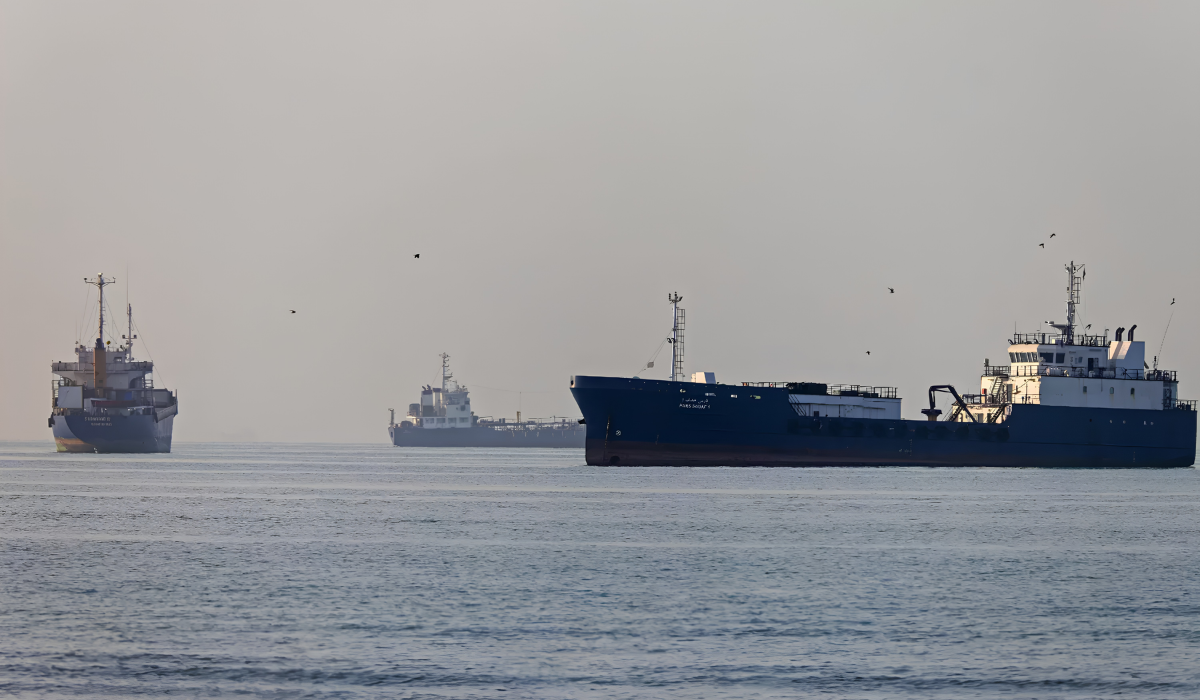
Iran launched multiple drones toward the Strait of Hormuz on Friday, according to CNN, citing a US official who said American aircraft shot down at least four of them.
The US military said it intercepted and shot down four Iranian drones launched toward the Strait of Hormuz on Friday before carrying out strikes on several Iranian coastal surveillance radar sites, escalating tensions and putting a fragile ceasefire at greater risk as the Trump administration increases pressure on Tehran.
“The attack drones posed an immediate threat to regional maritime traffic,” US Central Command said in a statement on social media.
According to the US military, the strikes on radar installations – including one located on an island in the strategic waterway – were conducted to prevent further attacks. The operations come as Washington enforces a blockade on Iranian ports in response to Tehran’s actions affecting the vital route for global oil and natural gas shipments, contributing to rising energy prices and creating political challenges for President Donald Trump’s Republican Party ahead of midterm elections.
The latest developments mark another round of escalating exchanges that have strained efforts to preserve and extend the ceasefire agreement. Earlier this week, Iranian drones reportedly struck Kuwait’s main airport, heavily damaging a passenger terminal, killing one person, injuring dozens, and temporarily shutting down operations.
Despite mounting concerns over the stability of the ceasefire, Trump told reporters on Friday that “the situation with Iran seems to be going quite well.”
Speaking at an event with farmers in Wisconsin, Trump said the US would soon reach a decisive outcome with Iran, whether through diplomacy or stronger measures.
“We’re going to come out of Iran very quickly, and it’s going to be very strong one way or the other – whether it’s a piece of paper or the very tough way,” Trump said. “The very tough way is maybe the easier way, but we’re going to come out, and your fertilizer prices are going to go way down, just like they were four months ago.”
Trump increasingly appears constrained by a conflict that has entered a prolonged stalemate. A week ago, US and Iranian negotiators reportedly reached a preliminary agreement to extend the ceasefire for 60 days and launch fresh talks on Iran’s nuclear program. However, Trump has since sought additional changes, while Iranian officials have not publicly indicated support for the proposal.
Asked by NBC’s “Meet the Press” why progress was slow, Trump said the negotiations remained difficult because of Iran’s strong sense of independence and national pride.
“There are things they never thought they’d be doing that they’re going to have to do,” he said. “They’ve got no choice, and it takes a little while.”
Trump also claimed Iran still retains between 21% and 22% of its missile stockpile.
Meanwhile, the administration has highlighted a newly agreed ceasefire between Lebanon and Israel reached through US-brokered talks in Washington. However, the Iran-backed Hezbollah group has rejected the arrangement, and fresh violence has raised concerns about its stability.
On Friday, Israeli forces carried out strikes across several areas in southern Lebanon and issued evacuation warnings for nine villages, including one sheltering thousands displaced by fighting. According to Lebanon’s state news agency, the strikes killed nine people across six locations.
The Israeli military also reported that two soldiers were wounded during clashes with militants in southern Lebanon, with one sustaining serious injuries.
The ongoing fighting in Lebanon – where Israeli forces continue to control significant territory in the south – threatens wider efforts to end hostilities with Iran and reopen the Strait of Hormuz, as Tehran has insisted that any long-term truce must also include Lebanon.
Separately, the US military said its forces boarded a sanctioned oil tanker linked to Iran in the Indian Ocean earlier Friday as part of efforts to curb Tehran’s oil revenues.
Washington also expanded pressure on Iran’s energy sector by announcing new sanctions targeting individuals, companies, and oil tankers connected to Iranian trade.