
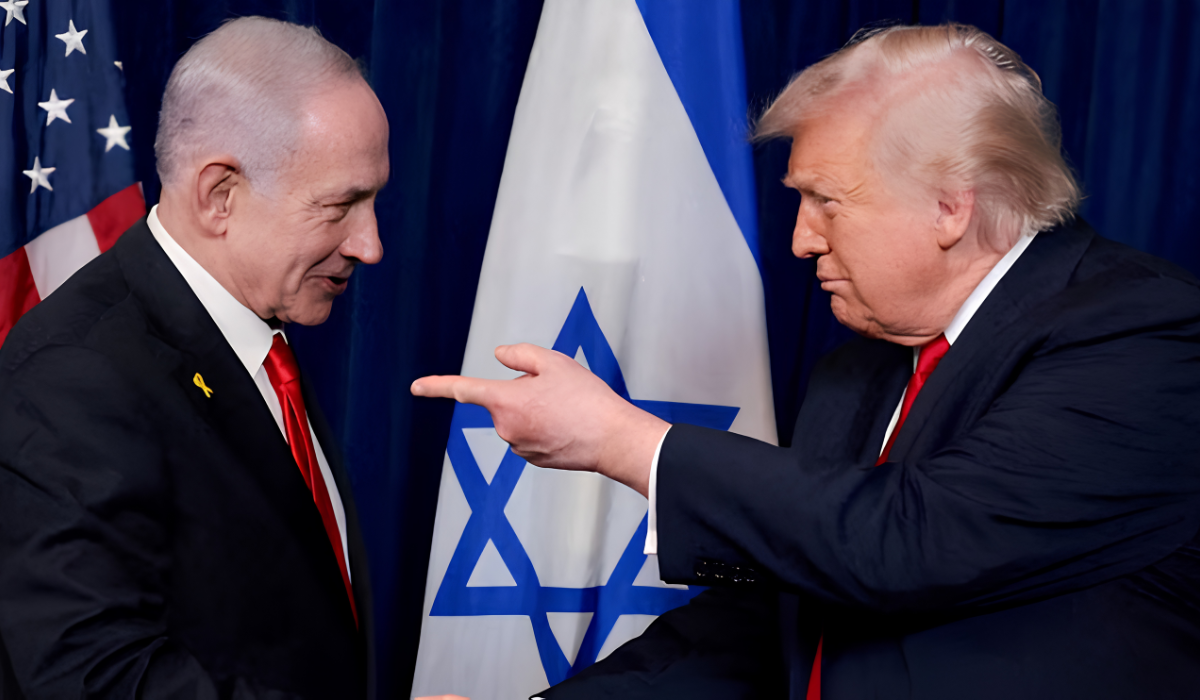
After months of negotiations, the United States and Iran officially signed a memorandum of understanding on Wednesday. President Trump signed the agreement at the Palace of Versailles before sending a copy to Tehran, where Iranian President Masoud Pezeshkian signed it, formally finalizing the deal.
However, Israeli Prime Minister Benjamin Netanyahu, a close ally of President Trump and a key figure in the conflict with Iran, has voiced dissatisfaction with the agreement, particularly the clause requiring Israel to withdraw its forces from southern Lebanon. Netanyahu argued that the continued presence of the Iran-backed militant group Hezbollah remains a significant security concern.
According to Reuters, Israel is in talks with the United States to secure approval for maintaining a military presence in southern Lebanon. Two Israeli officials, including a senior official close to Netanyahu’s office, confirmed the ongoing discussions on Thursday.
The remarks came a day after the United States and Iran signed an interim agreement that commits all parties to respect and uphold “the territorial integrity and sovereignty of Lebanon.”
The officials, who spoke to Reuters on condition of anonymity, said Israel is engaged in “stubborn” discussions with the United States over its plans to maintain troops in southern Lebanon.
A senior Israeli official added that the outcome of the talks will ultimately depend on President Trump and whether he chooses to press the issue by warning Israel of possible consequences if it fails to comply with the terms of the agreement.
A Major Challenge for Israel
According to Bloomberg, one of the key demands Iran insisted on including in the interim agreement was a provision requiring Israel to withdraw from its “security zones in Lebanon,” citing Zev Elkin, a member of Prime Minister Benjamin Netanyahu’s security cabinet.
“The prime minister told the US president, ‘We understand the concerns, but this is a vital matter for our national security, and we will not withdraw,'” Elkin said during an interview with Army Radio on Wednesday.
Israel had already expressed reservations after President Trump announced the finalization of the agreement. Several right-wing members of Prime Minister Benjamin Netanyahu’s coalition argued that the US-brokered deal does not apply to Israel.
“The agreement reached by Trump does not bind us. Israel is not subject to the United States; we are an independent and sovereign nation,” National Security Minister Itamar Ben-Gvir wrote on X.
Ben-Gvir further stated that Israel is not a party to the agreement because, in his view, it fails to guarantee the country’s security. He said Israel should insist on the dismantling of Hezbollah, retain control of areas its forces have secured, prevent militants from returning to positions near northern Israeli communities, and continue responding to any attacks directed at the country.
Israeli Finance Minister Bezalel Smotrich also criticised the agreement, calling it “bad for Israel and the free world.”
In a post on X, Smotrich said Israel would have to continue its efforts to bring down Iran’s leadership through its own means and “creative” strategies. He added that Israel must ensure Iran never acquires nuclear weapons.
Trump Offers Assurances to Netanyahu: ‘You Got the Best, Bibi’
Speaking at a press conference following the G7 Summit in Evian, France, on Wednesday, President Trump said Israel was receiving what it had sought most through the agreement.
Recalling his conversation with Prime Minister Benjamin Netanyahu before signing the document, Trump said, “Look at what Israel is getting. They’re not going to be nuked.”
He added that he had told Netanyahu that the agreement delivered “the most important thing” Israel had asked for.
While Israeli Prime Minister Benjamin Netanyahu has not publicly commented on the provision requiring Israel to withdraw its troops from southern Lebanon, he reaffirmed his longstanding position that Iran must never be allowed to acquire a nuclear weapon.
“With or without an agreement, Iran will not have nuclear weapons—not today and not tomorrow. As long as I am Prime Minister of Israel, it will not happen,” Netanyahu said, describing the objective as his “life’s mission.”
When asked whether Israel would act independently against Iran or Hezbollah in Lebanon, Netanyahu said he would “do what is necessary” to stop Iran from obtaining nuclear weapons. He added that he was “not limiting” himself in pursuing that goal, according to The Times of Israel.
Netanyahu also said Israeli forces would remain in the buffer zone in southern Lebanon “for as long as necessary.”